Picture this: you’re a mile from the dock, fish are finally biting, and your trolling motor sputters to a dead stop. The battery is gone, and so is your morning. It’s a scenario every angler dreads, and more often than not, the culprit isn’t the motor itself — it’s the battery powering it.
The deep cycle battery is the true heart of any trolling motor setup. Unlike the battery under your car’s hood, it’s engineered to deliver steady, sustained power over long periods and bounce back through hundreds of discharge cycles. But here’s the problem: the market is flooded with options, conflicting specs, and technical jargon that makes choosing the right one feel overwhelming. Do you go with AGM or lithium? How many amp-hours do you actually need? What does reserve capacity even mean for a day on the water?
Fortunately, modern solutions have made this easier than ever. Today’s 12V lithium batteries offer game-changing performance, and Bluetooth monitoring systems let you track your battery’s status in real time from your phone. Whether you’re a weekend angler, a serious bass tournament competitor, or an RV adventurer powering off-grid systems, this guide cuts through the noise. By the end, you’ll have everything you need to make a confident, informed decision and never get stranded on the water again.
Understanding Deep Cycle Batteries: The Engine of Your Trolling Motor
A deep cycle battery is fundamentally different from the starting battery in your car. Your car battery delivers a massive burst of current for two or three seconds to crank the engine, then immediately recharges. A deep cycle battery does the opposite — it releases a steady, controlled stream of power over hours, then accepts a full recharge without degrading. For a trolling motor, which runs continuously at varying speeds throughout a long day on the water, that distinction is everything.
The core mechanism is the discharge and recharge cycle. Every time you drain a deep cycle battery and bring it back to full charge, that counts as one cycle. Quality batteries are rated for hundreds or even thousands of these cycles, which directly determines how many seasons of reliable service you’ll get. Abusing a starting battery in this role destroys it within weeks.
Three metrics define a battery’s real-world performance. Voltage — most trolling motor setups run on 12V systems, though 24V and 36V configurations exist for larger boats. Amp-hours (Ah) measure total energy storage; a 100Ah battery can theoretically deliver 10 amps for 10 hours. Reserve capacity indicates how long the battery sustains a standard load before dropping below a usable threshold — a critical number for planning your time on the water.
The market currently offers three main chemistries: flooded lead-acid, AGM (Absorbent Glass Mat), and lithium iron phosphate (LiFePO4). Each involves real trade-offs in weight, lifespan, cost, and usable capacity. Choosing incorrectly means either overspending or finding yourself stranded. In a marine environment — with vibration, humidity, and temperature swings — that choice carries even more weight.
Battery Chemistry Showdown: AGM vs. Lithium for Marine Use
AGM (Absorbent Glass Mat) Batteries
AGM batteries represent a significant upgrade over traditional flooded lead-acid designs, making them a popular choice for budget-conscious anglers. They’re completely maintenance-free — no checking fluid levels, no risk of acid spills — and their sealed construction handles the constant vibration of boat travel remarkably well. Upfront costs are noticeably lower than lithium alternatives, which makes them appealing for occasional weekend fishers. However, the trade-offs are real. AGM batteries are heavy, often exceeding 60 pounds for a 100Ah unit, which adds meaningful weight to smaller boats. They also take considerably longer to recharge, and here’s the catch most buyers miss: you can only safely use about 50% of their rated capacity before risking permanent damage. A labeled 100Ah AGM battery effectively delivers just 50 usable amp-hours. Cycle life typically lands between 300 and 500 cycles under ideal conditions — meaning you may be replacing it every two to three seasons.
12V Lithium Batteries (LiFePO4)
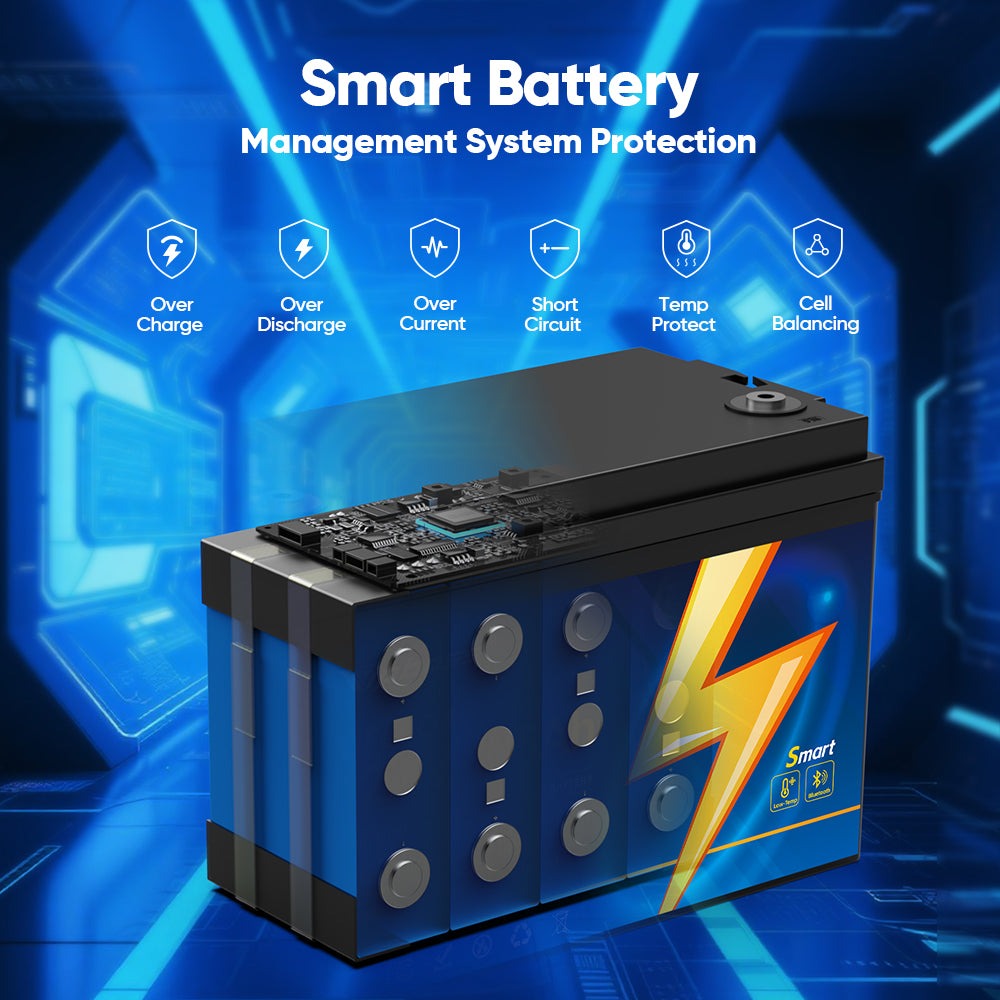
Lithium iron phosphate batteries have genuinely transformed what’s possible on the water. The weight advantage alone is striking — a 100Ah lithium battery typically weighs under 30 pounds, roughly half its AGM equivalent. For anyone managing boat trim or portability, that difference is immediately felt. More importantly, lithium batteries deliver a safe depth of discharge between 80% and 100%, meaning that same 100Ah rating translates to 80–100 actual usable amp-hours — nearly double the real-world output of an AGM. Power delivery stays consistent too; unlike lead-acid chemistries that gradually lose voltage as they discharge, lithium maintains steady output right until depletion, keeping your trolling motor running at full efficiency throughout the day. Charging is dramatically faster, often reaching full capacity in two to three hours. The cycle life is where the long-term value becomes undeniable — quality LiFePO4 batteries, such as those offered by Vipboss, are rated for 2,000 cycles or more, translating to a decade or longer of reliable service. Yes, the upfront cost is higher, but when you calculate cost-per-cycle over the battery’s lifespan, lithium consistently wins. For serious anglers and tournament competitors who spend significant time on the water, it’s not a luxury — it’s the smarter investment.
How to Calculate Your Exact Power Needs
Guessing your battery capacity is how anglers end up stranded. The good news is that calculating your actual power needs takes about five minutes and a little basic math — and it will save you from both underpowering your setup and overspending on capacity you’ll never use.
Start with your trolling motor’s amp draw. Check the motor’s specification sheet or manufacturer website for its maximum amp draw at full thrust. A common 55-pound thrust motor, for example, draws roughly 52 amps at full speed. You won’t run it wide open all day, but this number anchors your calculation.
Next, estimate your realistic runtime. Think about a typical fishing trip — how many hours are you actually running the motor? Factor in that you’ll vary speeds throughout the day. A practical rule of thumb is to assume you’re running at about 50% average power, which cuts the effective amp draw roughly in half. For that 55-lb thrust motor drawing 52 amps at full speed, your average draw becomes approximately 26 amps per hour.
Now multiply: Average Amp Draw × Hours on the Water = Required Amp-Hours. For a 6-hour trip at 26 average amps, that’s 156Ah needed. Then apply a 20–30% safety buffer to account for unexpected detours, wind resistance, or a longer day than planned — bringing your target to roughly 190–200Ah.
Finally, account for depth of discharge. If you’re buying AGM, only 50% of rated capacity is safely usable, so you’d need a 400Ah AGM bank to access 200 usable amp-hours. With lithium, 80–100% is safely accessible, meaning a 200Ah lithium battery covers your needs directly. That gap in real-world usability is why capacity comparisons between chemistries must always factor in depth of discharge — not just the label on the battery.
Essential Features for the Modern Boater and RV User
Bluetooth Monitoring Battery Systems
Knowing your battery’s state while you’re mid-lake is no longer a luxury reserved for commercial vessels. Bluetooth-enabled battery systems pair directly with a smartphone app, giving you real-time visibility into everything that matters: current voltage, state-of-charge percentage, estimated remaining runtime, and live charge or discharge current. The practical value is immediate — instead of guessing whether you have enough juice to reach your next waypoint, you’re making decisions based on actual data. For tournament anglers timing their final run back to the weigh-in, that information is the difference between a confident push and an anxious crawl. RV users benefit equally, monitoring battery reserves across solar input, appliance loads, and overnight draws without ever opening a panel. Some systems also log historical usage patterns, helping you fine-tune how you manage power across multiple trips. If you’re investing in a quality lithium battery, prioritize one with integrated Bluetooth monitoring — the peace of mind alone justifies it.
Durability in Marine Environments
A battery that performs well on a showroom shelf means nothing if it fails after a season of real marine use. Look for robust, impact-resistant casing that handles the constant vibration of boat travel without cracking or loosening internal connections. Terminals should be corrosion-resistant — marine air accelerates oxidation faster than most environments. An appropriate IP rating for water and dust resistance is non-negotiable; spray, rain, and splashing are facts of life on the water. Lithium batteries with welded cell construction and reinforced housings, like those in the Vipboss lineup, consistently outperform cheaper alternatives in these conditions.
Charging Compatibility & Solar Readiness
Lithium batteries require a charger specifically designed for LiFePO4 chemistry — using a standard lead-acid charger risks undercharging or triggering the battery’s protection circuits. Verify charger compatibility before purchasing. For RV users and extended off-grid trips, solar integration adds a compelling layer of self-sufficiency. A lithium battery’s ability to accept high charge currents means it captures solar energy more efficiently than AGM, replenishing faster during daylight hours and extending your time away from shore power considerably.
Making Your Final Decision: A Step-by-Step Selection Checklist
All the research in the world means nothing without a clear path to a decision. Use this checklist to move from information to action — systematically eliminating options until the right battery becomes obvious.
First, confirm your voltage requirement. Most single-motor setups run on 12V, but verify your trolling motor’s specifications before shopping. A 24V or 36V system requires either a dedicated battery bank or a higher-voltage unit — getting this wrong means the battery simply won’t work.
Second, run your capacity calculation using the method outlined earlier. Know your required usable amp-hours before you look at a single product listing. This number is your filter for everything that follows.
Third, choose your chemistry based on your priorities. If long-term value, weight savings, and maximum performance matter — and you spend meaningful time on the water — lithium is the clear answer. If upfront budget is the primary constraint and usage is occasional, AGM is a workable starting point.
Fourth, verify physical fit. Measure your battery compartment and check the battery’s dimensions and weight against your boat’s capacity. A battery that doesn’t fit or throws off your trim creates new problems.
Fifth, prioritize Bluetooth monitoring. Real-time state-of-charge visibility changes how confidently you manage your day on the water — don’t treat it as optional.
Sixth, confirm charger compatibility. Lithium batteries demand an LiFePO4-specific charger. Verify this before purchasing either component.
Finally, compare warranties. A manufacturer standing behind their product with a multi-year warranty signals genuine confidence in build quality — and protects your investment if something goes wrong. Shorter warranties on cheaper batteries often reflect exactly what you’d expect.
Power Your Fishing Trips with the Right Battery Choice
Choosing the right deep cycle battery for your trolling motor comes down to three things: understanding the chemistry, calculating your actual power needs, and prioritizing features that match how you use your boat. AGM batteries offer a reasonable entry point for occasional anglers watching their upfront budget, but lithium iron phosphate is the undeniable performance leader — lighter, longer-lasting, and far more efficient in real-world usable capacity. Run the amp-hour calculation before you buy anything, and remember that a battery’s label tells only half the story once depth of discharge enters the equation.
Modern features like Bluetooth monitoring have removed the guesswork from power management entirely. Knowing your exact state-of-charge in real time, whether you’re mid-lake chasing bass or parked at a remote campsite, transforms how confidently you operate. Pair that with proper charger compatibility and a battery built to survive marine conditions, and you’ve eliminated the most common failure points that leave anglers stranded.
The best deep cycle trolling motor battery isn’t necessarily the most expensive one — it’s the one that reliably delivers the power you need, for as long as you need it, season after season. Use this guide as your decision framework. Do the math, match the chemistry to your priorities, and invest with confidence. Your next trip on the water deserves a power source that keeps up with you from the first cast to the final run back to the dock.