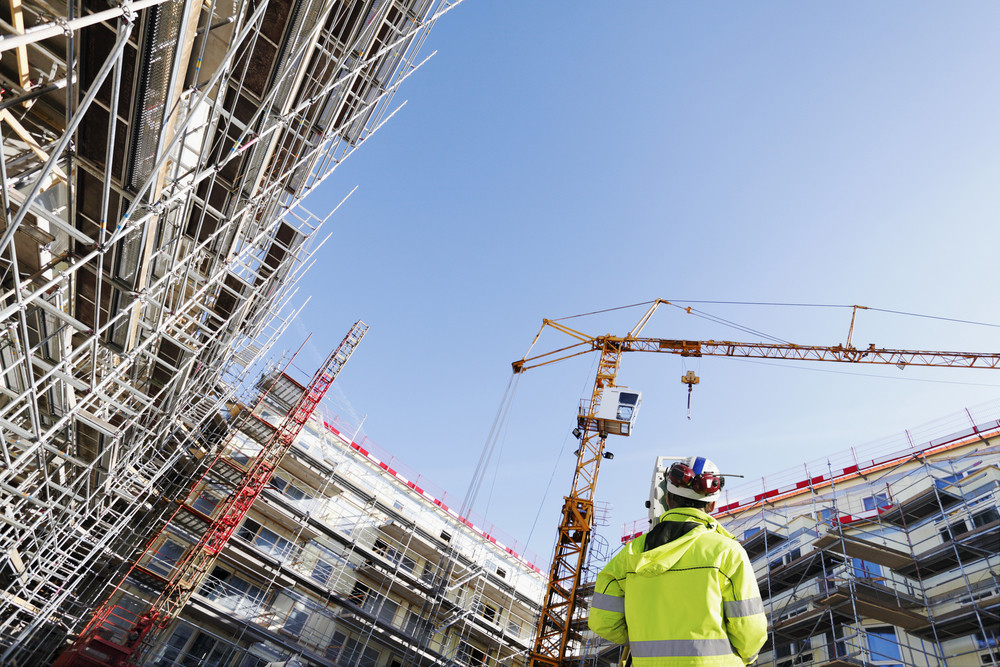
The construction industry continues to be one of the most influential sectors in the U.S. economy. From residential developments and commercial projects to infrastructure improvements, construction plays a vital role in shaping communities and driving economic growth. As demand increases, new trends are emerging that reflect expansion, competition, and specialization across the industry. Understanding these shifts can help contractors, investors, and property owners better navigate today’s evolving landscape.
Expanding Market Size Signals Strong Growth
One of the most significant indicators of industry momentum is overall market expansion. According to the Business Research Company, the foundation, structure, and building exterior contractors market is projected to increase from $1317.28 billion in 2024 to $1383.09 billion in 2025, reflecting a compound annual growth rate (CAGR) of 5.0%. This steady rise highlights the continued demand for structural development and exterior construction services.
A combination of residential housing demand, infrastructure funding, and commercial property investments often fuels such growth. As cities expand and older buildings require renovation, contractors specializing in structural frameworks and exterior finishes are seeing increased opportunities. A 5.0% annual growth rate may appear modest at first glance, but within a market exceeding a trillion dollars, even incremental growth translates into billions in additional activity.
This upward trend also reflects greater investor confidence in construction-related sectors. As more projects break ground, demand spreads across related services, including materials, labor, and equipment providers.
Heavy Equipment Rental Supports Project Efficiency
Behind nearly every construction project is a network of equipment providers helping contractors complete work efficiently. According to IBISWorld, there are 3,539 heavy equipment rental businesses operating in the United States. This substantial number underscores how essential access to equipment has become in modern construction.
Rather than purchasing costly machinery outright, many contractors now prefer renting specialized equipment for specific phases of a project. This approach reduces overhead costs and allows businesses to scale up or down depending on workload. From excavators and loaders to cranes and compactors, rental companies make advanced machinery accessible to firms of all sizes.
The growth in rental services also aligns with industry flexibility. Smaller construction firms can compete more effectively by leveraging rentals without committing to long-term capital investments. At the same time, large contractors can optimize cash flow by renting equipment for short-term or specialized tasks.
As construction activity increases nationwide, equipment rental companies are positioned as critical partners in keeping projects on schedule and within budget. Their presence reflects a broader shift toward cost-conscious and efficiency-driven operations.
A Highly Competitive Concrete Sector
Concrete remains one of the most fundamental materials in construction, forming the backbone of foundations, sidewalks, driveways, commercial slabs, and infrastructure projects. According to IBISWorld, there are 99,066 concrete contractor businesses across the United States. This large figure demonstrates both the demand for concrete services and the high level of competition within the sector.
With nearly 100,000 businesses operating in this space, differentiation has become essential. Contractors must emphasize quality workmanship, timely delivery, and competitive pricing to stand out. In many regions, local reputation and customer referrals remain powerful drivers of growth.
The size of the concrete contractor market also signals steady construction activity nationwide. Since concrete is integral to most building projects, its widespread use mirrors overall industry health. Whether for residential foundations or commercial parking structures, concrete services remain consistently in demand.
Technology and Specialization Drive the Future
Beyond market size and business volume, technological innovation is shaping the construction industry’s future. From project management software to advanced building materials, companies are streamlining operations and improving safety standards. Specialization is also becoming more common, with contractors focusing on niche services that allow them to command premium rates.
The construction industry is experiencing sustained growth supported by expanding market value, a strong network of equipment rental providers, and a highly competitive contractor landscape. With projected market increases reaching into the trillions and tens of thousands of specialized businesses operating nationwide, construction remains a cornerstone of economic development. As demand continues to rise, companies that prioritize efficiency, innovation, and quality service will be best positioned to succeed in this dynamic and evolving industry.