Table of Contents
- Introduction
- Rising Home Prices
- Inventory Challenges
- Impact of Mortgage Rates
- Suburban Market Dynamics
- Affordable Housing Initiatives
- Emerging Neighborhoods and Development Trends
- Rental Market Overview
- Environmental and Sustainability Considerations
- The Role of Technology in Seattle Real Estate
- Future Projections
- Conclusion
Introduction
Seattle’s real estate market has undergone significant transformations in recent years. As we progress through 2026, understanding these changes is essential for both buyers and sellers aiming to make informed decisions. For expert guidance in navigating this dynamic market, consider consulting with West Seattle real estate agent Molly Kemper. As part of the Monroe Kemper team, Molly brings a wealth of experience and a client-centric approach to real estate, serving areas including West Seattle, Seattle, and the Greater Seattle region.
Rising Home Prices
Seattle has experienced a notable increase in home prices over the past few years. Reports indicate that the median home price in the city has risen by approximately 5.2% year over year, reaching $789,000. This upward trend reflects the city’s growing demand and limited housing supply.
Inventory Challenges
The housing inventory in Seattle remains tight. Active listings have increased by 5.4% over the past year, yet the market still favors sellers. This scarcity continues to drive competition among buyers, often leading to bidding wars and homes selling above the asking price.
Impact of Mortgage Rates
Mortgage rates have seen fluctuations, influencing buyer behavior. While rates have recently dipped into the low 6% range, down from mid-6% levels in previous years, affordability remains a concern. This slight decrease has provided some relief, but many potential buyers remain cautious, awaiting more favorable conditions.
Suburban Market Dynamics
Seattle’s suburbs have also felt the ripple effects of the city’s housing trends. Notably, 23 suburbs have experienced price drops, with areas like Bothell and Pacific seeing decreases of up to 30.6% and 27.7%, respectively. This shift presents opportunities for buyers seeking more affordable options outside the city center.
Affordable Housing Initiatives
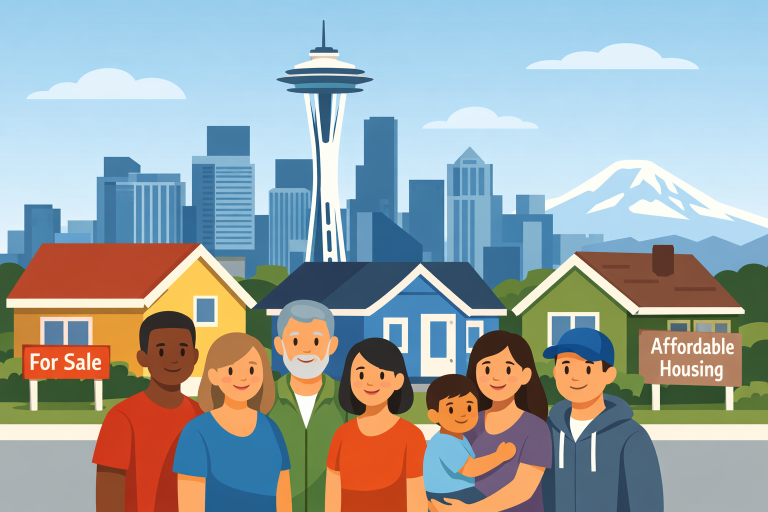
To address the affordability crisis, organizations like the Homestead Community Land Trust are offering homes priced between $270,000 and $300,000. These initiatives aim to provide low- to moderate-income families with access to homeownership, countering the prevailing high market prices.
Emerging Neighborhoods and Development Trends
Amid ongoing affordability challenges, several neighborhoods in Seattle are emerging as hotspots for new development and investment. Areas such as Georgetown, South Park, and Rainier Valley have seen a surge in new multi-family complexes, townhomes, and condominium projects. These developments are drawing the interest of both young professionals and investors, thanks to relatively lower entry prices and the promise of future appreciation.
The city has also introduced zoning reforms to allow more mid-rise apartment buildings and “missing middle” housing types, such as duplexes, triplexes, and backyard cottages. These changes intend to boost density, increase rental supply, and provide alternatives to traditional single-family homes. As a result, previously underutilized lots are being transformed into vibrant, walkable communities with amenities designed for modern urban living.
Rental Market Overview
Seattle’s rental market has undergone its own shifts over the past year. With rental rates climbing by approximately 4% annually, renters are feeling the pressure of limited supply and increased demand, particularly in popular neighborhoods like Capitol Hill, Ballard, and Belltown. Vacancy rates remain low, hovering near 3%, prompting many renters to renew leases rather than face the competitive search for a new home. Meanwhile, new apartment projects coming online throughout downtown and satellite neighborhoods are providing some relief, but competition remains fierce for units with desirable amenities and locations.
For those interested in investment properties, Seattle’s strong rental demand offers the potential for steady cash flow, especially in areas near major employment centers and transit hubs. Short-term rentals and accessory dwelling units are also growing in popularity, as the city’s tourism and relocation rates remain robust.
Environmental and Sustainability Considerations
The city of Seattle has been a leader in green building initiatives and sustainability-focused policies. Many new developments are incorporating eco-friendly materials and energy-efficient designs and aiming for LEED certification. Homebuyers are increasingly seeking properties equipped with solar panels, advanced insulation, smart home systems, and electric vehicle charging stations. These features not only appeal to environmentally conscious residents but also promise lower long-term utility costs.
Additionally, Seattle’s commitment to expanding public transportation, including the Light Rail and the RapidRide bus system, is making it easier for residents to live car-free or reduce their carbon footprint. Many real estate professionals advise considering access to transit options as a key factor in property value and future sellability.
The Role of Technology in Seattle Real Estate
Technology is changing the way buyers and sellers approach the Seattle real estate market. Virtual tours, 3D walkthroughs, and drone photography have become standard tools, enabling greater flexibility and convenience for prospective buyers. For sellers, leveraging data-driven marketing and advanced analytics helps position properties for optimal exposure and sale prices. Real estate platforms are making it easier to monitor market trends, compare listings, and track neighborhood changes in real time.
Furthermore, tech-driven solutions such as blockchain-based property transactions and digital mortgage approvals are on the horizon, streamlining the often complex and paperwork-heavy processes involved in buying or selling a home. These innovations are particularly relevant in a tech-savvy city like Seattle, where residents are quick to adopt new digital experiences.
Future Projections
Looking ahead, projections suggest that Seattle’s median home price could reach $1 million by 2028 and nearly $1.5 million by 2033. This anticipated growth underscores the importance of strategic planning for both current and prospective homeowners.
Conclusion
Seattle’s housing market in 2026 presents a complex landscape of rising prices, limited inventory, and evolving suburban dynamics. For those navigating this market, staying informed and considering all available options is essential. Consulting with experienced real estate professionals can provide valuable insights tailored to individual needs.