
Key Takeaways
- Hydro excavation uses pressurized water and vacuum systems for precise soil removal, minimizing damage to underground utilities.
- Vacuum excavation employs high-powered suction to remove soil, reducing the risk of utility strikes and enhancing safety.
- These methods are particularly beneficial in urban areas with dense infrastructure.
- Implementing non-destructive excavation techniques can lead to cost savings and improved project timelines.
Table of Contents
- Introduction
- Hydro Excavation: A Precision Approach
- Vacuum Excavation: Enhancing Safety and Efficiency
- Benefits of Modern Excavation Methods
- Case Studies
- Conclusion
Introduction
Construction projects today face heightened expectations for safety and sustainability, making traditional excavation methods less desirable than ever. These older methods often lead to accidental utility strikes and can cause significant environmental damage. Fortunately, advanced techniques now provide options that prioritize both safety and environmental responsibility. Among the best modern approaches are hydro excavation and vacuum excavation, which are transforming the way contractors dig in challenging spaces while protecting valuable assets beneath the ground. As more construction professionals seek reliable and environmentally sound practices, daylighting excavation has become an increasingly popular term. Daylighting, which involves safely exposing underground utilities using specialized excavation methods, showcases the industry’s shift toward precision-focused, non-destructive solutions.
These next-generation excavation methods go a step beyond conventional digging equipment by using sophisticated technology to eliminate the guesswork often associated with underground work. This is especially important when working in populated urban environments or near sensitive infrastructure. The results speak for themselves: fewer disruptions, lower cleanup costs, and enhanced worker safety are all closely linked with these innovations. Both hydro excavation and vacuum excavation offer compelling alternatives to damaging, outdated practices. Their adoption is not only a matter of best practice but also a commitment to meeting evolving regulatory and community standards across North America and beyond.
Hydro Excavation: A Precision Approach
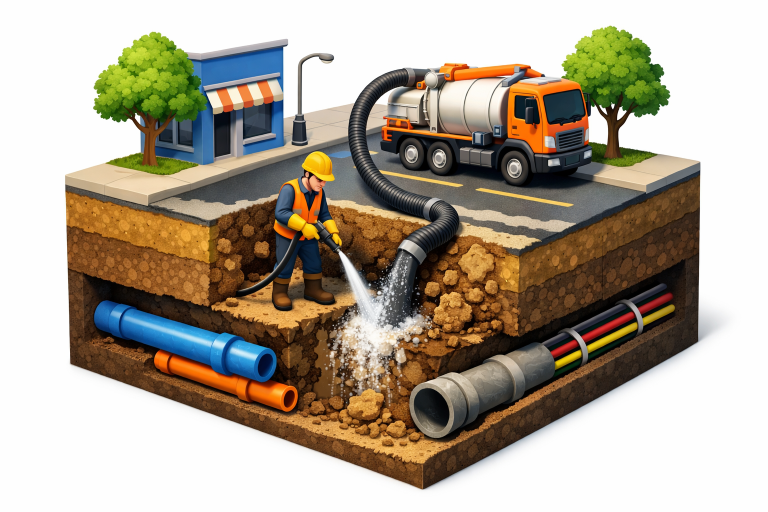
Hydro excavation is revolutionizing the excavation industry by replacing traditional digging with a process that uses highly controlled streams of pressurized water. The water safely breaks up soil and debris, which are then immediately vacuumed away into a holding tank for containment and disposal. This method offers a level of precision that is difficult to achieve with shovels or mechanical excavators.
The primary benefit of hydro excavation is its ability to uncover utilities such as power lines, gas pipes, and fiber-optic cables without causing avoidable damage. It also reduces the risk of accidental strikes that could result in significant financial or safety repercussions. Companies working in congested urban streets find hydro excavation particularly useful because of its effectiveness in restricted or awkward job sites.
Vacuum Excavation: Enhancing Safety and Efficiency
Vacuum excavation is another innovative approach that uses advanced suction technology to remove soil and materials with high-powered vacuums. This method greatly minimizes the disruption to the surrounding area, which is crucial in developed settings where multiple utilities may be buried close together. Vacuum excavation can be performed with air or water as the breaking agent, further increasing its versatility.
Not only does vacuum excavation reduce the likelihood of costly utility strikes, but it also provides a cleaner jobsite, as the displaced soil is immediately drawn out and contained for later use or safe disposal. The method’s accuracy and speed dramatically improve workflow, making it a favorite for utility location, potholing, and other critical construction tasks. A For Construction Pros feature article emphasizes the safety advantages and long-term cost savings that vacuum excavation consistently delivers to contractors and municipalities.
Benefits of Modern Excavation Methods
- Safety: By minimizing direct contact with underground infrastructure, these excavation techniques significantly reduce the risk of accidental damage and resulting hazards for workers and nearby residents.
- Precision: The precise control offered by hydro and vacuum systems ensures clean, targeted soil removal even in confined or crowded urban locations.
- Environmental Impact: Because soil disruption is kept to a minimum, these methods prevent unnecessary exposure of subsoil, contamination, or large-scale site disturbance, helping protect both local environments and ecosystems.
- Cost Efficiency: While advanced, non-destructive excavation methods may have higher upfront equipment costs, they often lead to noticeable savings because they limit expensive repairs and project delays. Real-world project managers report improved timelines and fewer insurance claims due to the reduced likelihood of damaging critical infrastructure.
Case Studies
Real project experiences best demonstrate the benefits of hydro and vacuum excavation techniques. For example, a municipal project in San Jose, California, relied on hydro excavation to safely expose complex webs of electrical and communication lines, ensuring uninterrupted service and eliminating unforeseen repair costs. In another instance, vacuum excavation played a central role in a major Toronto street renovation, where dense infrastructure and closely packed utilities required exact excavation for utility upgrades. The use of these advanced methods kept the project within budget and on schedule, as highlighted in post-project reports from city engineers. Numerous other municipalities and private contractors have likewise embraced these safe and sustainable excavation practices, reinforcing their status as industry standards for both safety and operational efficiency.
Conclusion
The adoption of modern excavation solutions, such as hydro and vacuum excavation, represents a pivotal step forward in the construction industry’s commitment to safety, sustainability, and operational excellence. As utility networks grow more complex and urban density increases, integrating non-destructive excavation methods will remain essential to mitigate risks and meet environmental and regulatory expectations. By adopting these advanced technologies, industry professionals not only protect workers and assets but also demonstrate leadership in responsible construction practices to build a more resilient future.