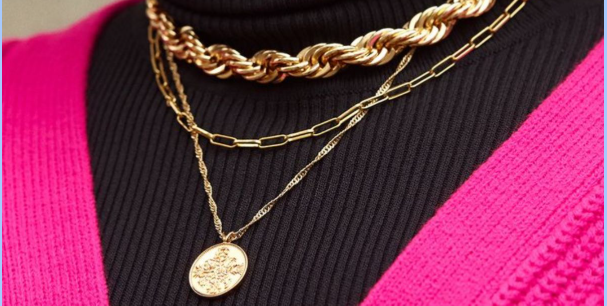
The rope chain is perhaps the most deceptive masterpiece in a jeweler’s vault. At first glance, it appears to be a simple, twisted cord of precious metal, but upon closer inspection, it reveals a complex architectural weave that creates more surface area for light reflection than almost any other link style. While a single, thick rope has long been a staple of hip-hop royalty and classic menswear alike, the modern luxury landscape has shifted toward the art of the stack. Layering is no longer just about putting on everything you own at once; it is a calculated exercise in proportions, textures, and heights. To pull off a bold layered look without looking like you accidentally tripped into a treasure chest, you must understand the physics of how these chains interact with one another.
The Mathematical Precision of Graduated Lengths
The foundation of a successful stack lies in the “cascade” effect. If you wear three chains of the exact same length, they will inevitably tangle, overlap, and lose their individual identities within minutes of leaving the house. An expert jeweler will always suggest a minimum of two inches of separation between each piece. For instance, a 20 inch base layer paired with a 22 inch and a 24 inch chain creates a clean, organized visual ladder. This spacing allows the eye to appreciate the intricate diamond-cut facets of each individual strand. When you select high quality rope chains, this graduated approach ensures that the weight of the gold is distributed evenly across your collarbone, preventing the pieces from bunching up and creating unnecessary friction that can wear down the delicate links over time.
Mastering the Play of Widths and Weights
A common mistake in the luxury world is assuming that every chain in a stack needs to be a heavyweight contender. In reality, a truly bold look relies on contrast. If you are starting with a substantial 6mm or 8mm rope as your “anchor” piece, your secondary layers should ideally be slightly thinner, perhaps in the 3mm to 5mm range. This variation creates a sense of depth and three-dimensionality. The thicker chain provides the structural “muscle” of the look, while the thinner companions add a shimmering, refined detail that softens the overall aesthetic. Think of it like a well-tailored suit; the heavy rope is the jacket, while the thinner layers are the silk pocket square and the polished cufflinks. They work in harmony to elevate the entire ensemble rather than competing for the spotlight.
The Secret Brilliance of Diamond-Cut Faceting
When we discuss the “boldness” of a rope chain, we are often talking about its luster. High-end ropes are frequently “diamond-cut,” a process where the jeweler uses a precise industrial tool to shave tiny, flat planes into the twisted gold links. These facets act like microscopic mirrors. In a layered setup, diamond-cut ropes are particularly effective because as you move, the chains catch light from different angles simultaneously. This creates a strobe-like effect that is far more captivating than the static glow of a flat link. If you are aiming for maximum impact, ensure that at least one of your layered pieces features these sharp, expert cuts. It provides that “hit” from across the room that distinguishes investment-grade jewelry from entry-level gold.
Balancing Solid Construction with Daily Wearability
One of the most important technical insights a jeweler can offer is the distinction between hollow and solid rope chains. While hollow chains might look impressive on a Zoom call, they lack the “hang” required for a proper layered look. Solid gold ropes have a natural gravitational pull that allows them to sit flush against the chest and move with the body. When you layer solid pieces, the weight creates a satisfying tension that keeps the chains in their designated lanes. Furthermore, solid chains are significantly more durable. Because the rope design involves many interlocking points of contact, a hollow version is prone to denting or snapping under the weight of a pendant or the sheer movement of a multi-chain stack. For a look that is meant to last a lifetime, solid gold is the only logical choice.
Incorporating Pendants into the Layered Aesthetic
Adding a pendant to a layered rope stack is the ultimate way to personalize your style, but it requires careful planning. The pendant should almost always be placed on the longest or the middle chain to act as a visual “v-point” for the entire look. If the pendant is too heavy for a thin rope, it will stretch the links and eventually cause a break. A general rule of thumb is that the chain should be at least half the width of the pendant’s bail to ensure structural harmony. Additionally, the texture of the rope chain provides a wonderful contrast to the smooth, high-polish finish of a gold coin or a diamond-encrusted medallion. By anchoring your stack with a meaningful centerpiece, you transform a collection of gold into a signature statement of identity.
Curating Your Personal Gold Legacy
The journey of building a bold layered look is rarely finished in a single purchase. It is a process of curation, where you add pieces that reflect your evolving taste and success. By focusing on graduated lengths, varying widths, and the superior sparkle of diamond-cut facets, you create a visual language that is uniquely yours. A well-executed stack of rope chains is a testament to an appreciation for classical geometry and modern luxury. It is a style that feels substantial, looks expensive, and carries a weight of authority that few other jewelry combinations can match. As you select your next piece, remember that the best investment is one that balances technical excellence with the undeniable swagger of a masterfully layered aesthetic.