Key Takeaways
- Illustrated educational books combine visuals and text to enhance comprehension and engagement.
- They cater to diverse learning styles, making complex subjects more accessible and comprehensible.
- Incorporating illustrations into educational materials can enhance literacy development and social-emotional well-being.
Table of Contents
- Enhancing Comprehension Through Visuals
- Catering to Diverse Learning Styles
- Impact on Literacy Development
- Boosting Social-Emotional Health
- Real-World Applications
- Choosing the Right Illustrated Books
- Future Trends in Illustrated Education
- Conclusion
Across generations, illustrated educational books have served as an essential bridge between curiosity and understanding. By skillfully integrating artwork with clear explanations, these books empower readers to grasp new concepts and enhance their knowledge of the material. Whether delving into the mechanics of science or the complexity of social interactions, their impact on learning cannot be overstated. The engaging nature of picture-rich content is also evident in resources like the Lion President children’s book, which brings lessons to life through visual storytelling.
Illustrated educational books not only help children but also support learners of all ages. The combination of visuals and text can make lessons memorable and approachable, reducing learning anxieties and sparking natural curiosity. As education evolves with technology and pedagogy, these books adapt as well, supporting lifelong learners everywhere.
Enhancing Comprehension Through Visuals
Visual aids are proven to anchor information more effectively in memory than text alone. Dual Coding Theory, introduced by Allan Paivio, suggests that the brain processes verbal and visual data along separate channels, allowing for more complex learning when both are engaged simultaneously. This combination is beneficial for abstract subjects like mathematics and science, where diagrams and infographics help clarify complex concepts in a clear and digestible manner. A detailed illustration can often explain a process or system more clearly than several paragraphs of text.
In addition, research highlighted by Edutopia supports the idea that visuals enhance both comprehension and memory, giving learners multiple pathways to recall information long after the initial learning experience.
Catering to Diverse Learning Styles
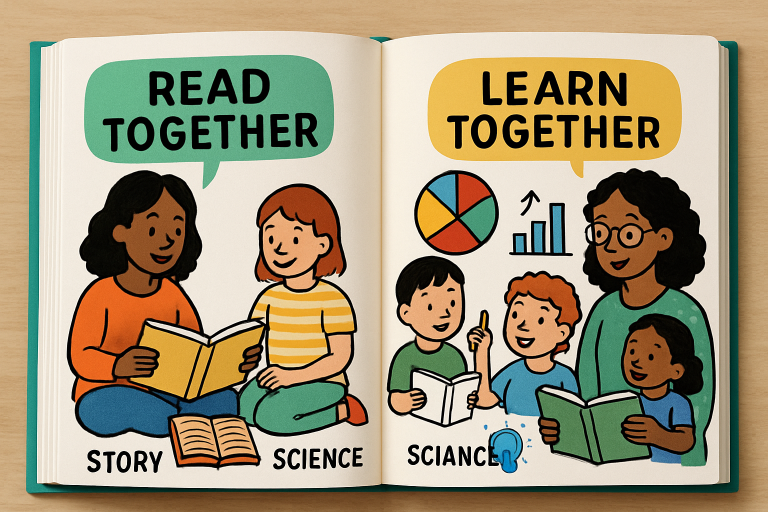
Learning is a personal process, with each individual finding specific modes of information more accessible than others. Illustrated educational books respect this diversity by weaving together images, diagrams, and explanations, engaging both visual and auditory learners. Visual learners are drawn to diagrams, flowcharts, and annotated illustrations. At the same time, those with a preference for words can still benefit from descriptive captions and succinct explanations that accompany the imagery. This layered approach increases the likelihood of understanding and retention for a broader range of students.
Impact on Literacy Development
The role of illustrated books in developing literacy skills cannot be understated. According to a recent study by Thorndike Press, 87% of teachers observed increased reading success when students engaged with large print books featuring strong visual elements. Illustrations prompt children to connect stories with images, strengthening word recognition and inferential thinking. Visual clues also help emerging readers decode unfamiliar words and meanings, thereby improving language acquisition and reading confidence.
A publication by Wiley emphasizes that illustrations act as scaffolding for young readers, supporting independent comprehension and encouraging extended engagement with books.
Boosting Social-Emotional Health
Illustrated educational books also serve a vital role in promoting social-emotional growth. When books depict characters experiencing a range of emotions and situations, readers gain insight into empathy, resilience, and understanding. Programs, such as those developed by Scholastic, draw attention to the emotional aspects of literacy, fostering compassion and helping children manage their own feelings as they see stories unfold both visually and textually.
Real-World Applications
The practical impact of illustrated books is evident in classrooms and homes around the world. Engaging platforms like Vooks have introduced animated storybooks, blending narration with rich illustrations to encourage young readers to participate actively in the story. These multimodal tools are particularly effective for reluctant readers or those struggling with traditional texts, making learning more inviting and less intimidating.
Choosing the Right Illustrated Books
Selecting an illustrated educational book involves evaluating the learner’s age, interests, and the quality of the material. Books with vibrant, accurate illustrations and clear, concise text are most effective. Resources such as TeachingBooks.net offer educators and parents curated lists that align with learning objectives, ensuring the chosen books resonate with readers and support specific learning goals. Additionally, considering cultural representation and inclusivity in book selection can broaden a child’s perspective and foster acceptance of diversity.
Future Trends in Illustrated Education
The future of illustrated educational books is being shaped by technological advances that add layers of interactivity. Augmented reality (AR) storybooks and interactive e-books offer immersive experiences that bring characters and concepts to life in new and engaging ways. Research into AR platforms, such as Metabook, demonstrates how these technologies create dynamic, multisensory reading environments that increase motivation and retention. As digital tools continue to expand, illustrated books will only become more engaging, promoting lifelong learning in the digital age.
New developments are highlighted by educational leaders at Education Week, which explores how AR and VR are transforming not just how students learn, but also how they interact with and internalize content.
Conclusion
Illustrated educational books play a crucial role in engaging learners, making complex ideas tangible, and supporting both academic and emotional growth. By marrying visual storytelling with informative text, these resources connect with readers in ways that plain text simply cannot. As technology and educational practices evolve, illustrated books will continue to adapt, providing supportive, dynamic, and inclusive content for lifelong learners worldwide.