The blockchain industry is entering a period of transformation. After years of rapid innovation, token launches, and speculative growth cycles, attention is increasingly shifting toward a more fundamental question: what infrastructure is needed to support long-term adoption?
That question dominated discussions at the 2026 Crypto Valley Conference (CVC), one of Europe’s most influential gatherings for blockchain leaders, policymakers, institutional investors, and technology innovators. Held in Switzerland’s renowned Crypto Valley ecosystem, the event has become a key platform for shaping conversations around digital assets, stablecoins, tokenized real-world assets (RWAs), artificial intelligence, and financial innovation.
Among the notable presentations at this year’s conference was a keynote from Eddie Chong, Chairman and CEO of SFI Group. His message was straightforward yet timely: the industry’s greatest challenge is no longer technology—it is trust.
As blockchain markets mature and regulatory expectations increase worldwide, projects are being evaluated less on vision and more on their ability to deliver real-world utility, sustainable liquidity, and compliant infrastructure. According to Chong, those factors will determine which platforms are positioned to lead the next chapter of Web4 development.
The Growing Disconnect Between Innovation and Liquidity
Blockchain technology has advanced significantly over the past decade. Tokenization frameworks have matured, stablecoins have become an important component of digital finance, and artificial intelligence is increasingly being integrated into blockchain ecosystems.
Yet despite these developments, many projects continue to face a common problem: limited liquidity and slow institutional participation.
During his keynote, Chong argued that the issue is not the lack of innovation. Instead, he suggested that the industry continues to struggle with fragmented regulations, inconsistent standards, and concerns surrounding transparency and asset security.
These challenges are particularly evident in the real-world asset sector.
Although RWAs have become one of the most discussed opportunities in blockchain, many tokenized assets still struggle to achieve active circulation and meaningful secondary-market demand. Similarly, while stablecoins have gained widespread recognition, practical spending opportunities remain limited compared to their overall market size.
At the same time, AI-powered systems are becoming increasingly sophisticated, but much of today’s financial infrastructure remains designed for human users rather than autonomous digital agents.
According to Chong, these challenges are interconnected and require a more comprehensive infrastructure approach.
The Emergence of Web4
A key theme of the presentation centered on the concept of Web4.
While Web3 introduced decentralized ownership and peer-to-peer interaction, Web4 is increasingly being associated with intelligent, autonomous systems capable of participating directly in economic activity.
In this emerging environment, AI agents may eventually manage assets, execute transactions, make purchasing decisions, and interact with financial networks independently.
However, achieving this vision requires more than advanced algorithms.
It requires payment rails, regulatory frameworks, liquidity mechanisms, and real-world commercial environments capable of supporting both human and machine participants.
This is where SFI believes the industry must focus its attention.
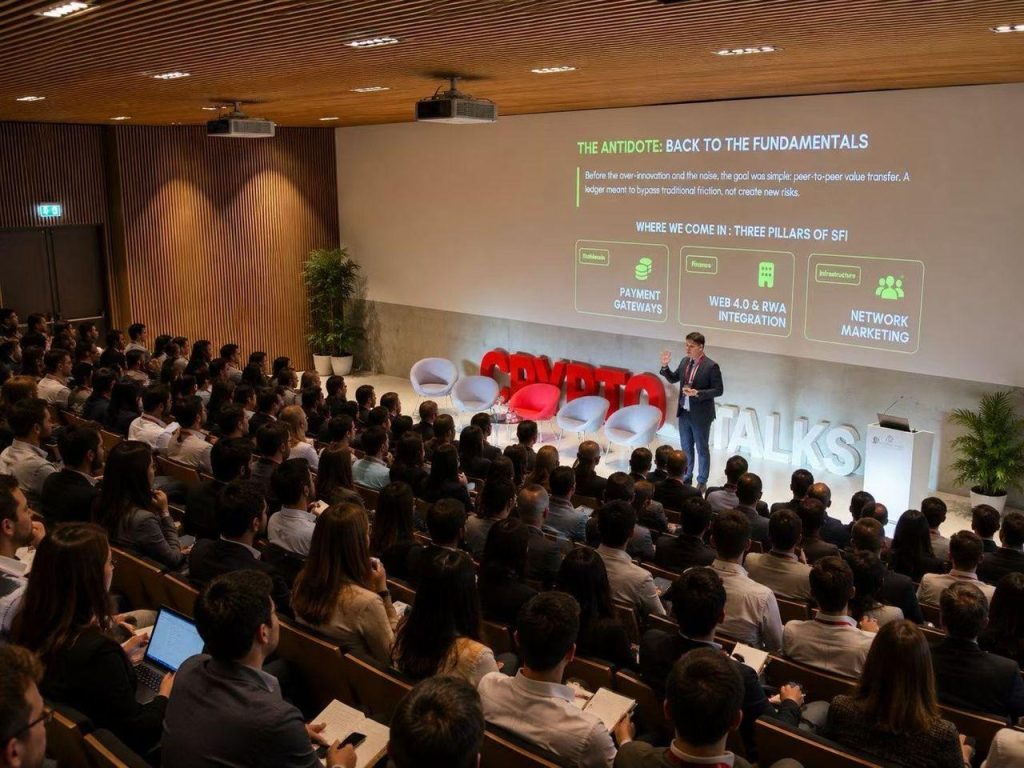
SFI’s Infrastructure-Driven Strategy
Rather than approaching blockchain as a collection of isolated products, SFI has been developing an interconnected ecosystem designed to link payments, commerce, tokenized assets, and artificial intelligence.
The company’s strategy revolves around three core pillars:
- Stablecoins as a transactional layer
- Real-world assets as a source of value creation
- Artificial intelligence as a driver of economic activity
To support this model, SFI has built several interconnected platforms.
Solulu Club
Serving as the ecosystem’s community layer, Solulu Club has attracted more than 200,000 active users and provides an engagement framework for participants across the network.
Solulu Pay
Operating in over 100 countries, Solulu Pay functions as a compliance-focused payment infrastructure designed to bridge traditional financial systems and digital assets.
Caviar
The luxury commerce platform introduces real-world spending opportunities through collaborations involving premium global brands, including Lamborghini and Fendi.
COPX DAO
COPX DAO incorporates AI-powered quantitative trading capabilities aimed at creating additional participation and value-generation opportunities within the ecosystem.
RWA Incubator and Exchange
The platform focuses on supporting businesses and asset owners throughout the tokenization process, from asset onboarding and incubation to management and liquidity access.
Collectively, these components are intended to create a closed-loop ecosystem where users, assets, payments, and AI technologies interact within a unified framework.
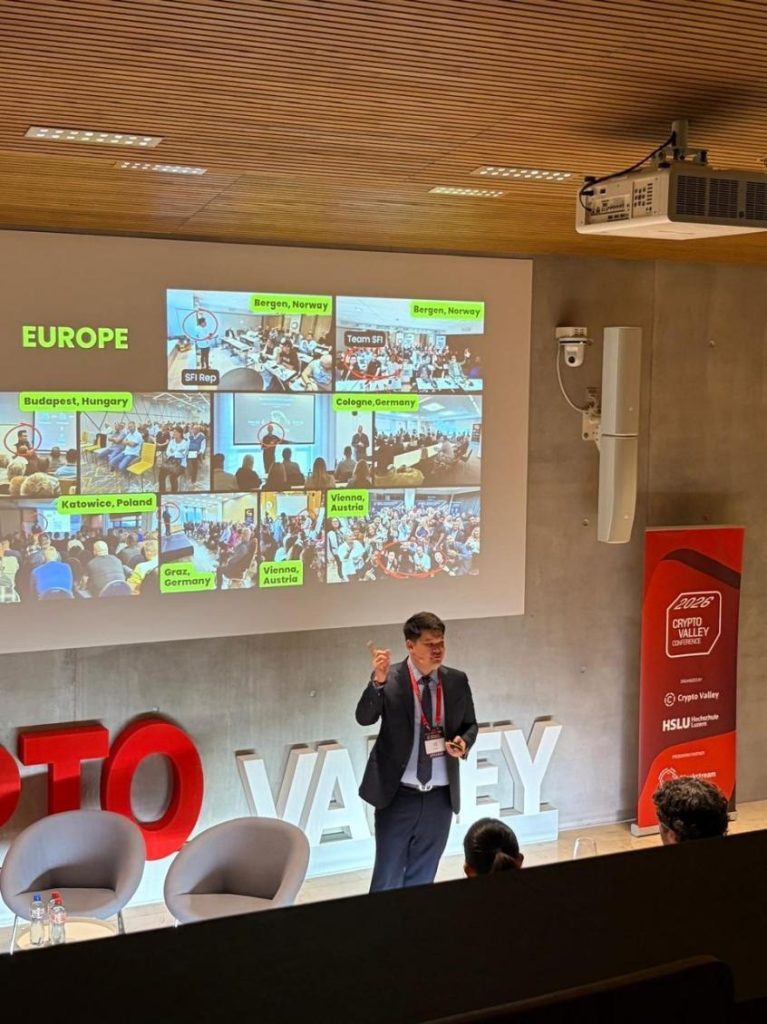
Why Trust Has Become the Industry’s Most Valuable Asset
One of the strongest themes emerging from the conference was the growing importance of trust.
In previous market cycles, innovation often attracted attention regardless of operational maturity. Today’s environment is different.
Investors, institutions, and regulators are increasingly focused on transparency, compliance, governance, and measurable business activity.
Chong emphasized that sustainable liquidity is ultimately a byproduct of confidence.
When users trust a platform, transactions increase. When institutions trust a framework, capital flows more freely. When regulators trust operational standards, broader market participation becomes possible.
Without that foundation, even the most sophisticated technologies may struggle to achieve meaningful adoption.
This perspective resonated with many conference participants who believe the next phase of blockchain growth will be driven by execution rather than speculation.
Regulatory Clarity Arrives at a Critical Time
Adding further significance to the conference was the release of new guidance related to real-world assets by authorities in Zug, Switzerland.
The announcement addressed key areas of the tokenization ecosystem, including issuance requirements, circulation standards, compliance expectations, and cross-border settlement considerations.
For many industry observers, the development represented another step toward greater institutional participation in digital asset markets.
Clearer regulations help reduce uncertainty and provide a stronger foundation for long-term investment and innovation.
As tokenization continues to gain traction globally, jurisdictions that establish transparent regulatory frameworks are likely to play a leading role in attracting businesses, investors, and infrastructure providers.
Beyond Narratives: The Industry’s Next Growth Phase
The conversations taking place throughout Crypto Valley Conference 2026 reflected a broader shift occurring across the digital asset sector.
The industry is moving beyond an era dominated by concepts and market narratives. Increasingly, success is being measured by infrastructure readiness, user adoption, transaction activity, and regulatory alignment.
SFI’s participation at the event highlighted this transition.
Rather than focusing exclusively on future possibilities, the company emphasized practical implementation through payments, commerce, tokenized assets, artificial intelligence, and compliance-driven operations.
Whether this approach becomes the prevailing model for Web4 remains to be seen. However, the direction of industry discussion is becoming increasingly clear.
The next wave of growth is likely to belong to organizations capable of building systems that connect digital assets with real-world economic activity.
As blockchain technology continues to mature, infrastructure—not speculation—may ultimately become the defining competitive advantage.
About SFI
SFI is a Web4-focused ecosystem that integrates stablecoins, digital payments, real-world asset tokenization, and artificial intelligence into a unified infrastructure framework. Through platforms including Solulu Club, Solulu Pay, Caviar, COPX DAO, and its RWA initiatives, the company aims to support the evolution of a more connected and utility-driven digital economy.
Follow the SFI Ecosystem:
SFI: https://x.com/SFI_AI
SoluluPay: https://x.com/SoluluPay
Caviar: https://x.com/shopcaviar
COPX DAO: https://x.com/Copx_DAO
Company Name(公司名): SFI
Contact Person(联系人): Davil Lin
Email(邮箱):[email protected]
State(地区): Kuala Lumpur
Country(国家): Malaysia
Website(网站):https://solulu.club/