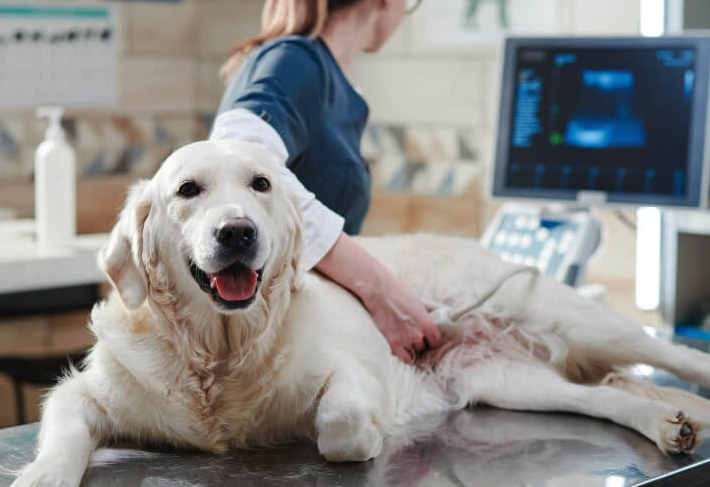
You might be watching your pet move a little differently, eat a little less, or just “not seem like themselves,” and your mind is already racing. You cannot ask them what hurts. You can only watch, worry, and hope your veterinarian at an animal clinic in London, Ontario figures it out quickly. That gap between not knowing and finally getting answers can feel very long and very heavy.
This is where diagnostic imaging quietly changes the story. Tools like X‑rays, ultrasound, CT, and MRI let your veterinarian see what your pet cannot say. They help uncover hidden injuries, early disease, and subtle changes that a physical exam alone might miss. You are not wrong to feel anxious when someone suggests advanced imaging. It often means the situation is serious enough that guessing is no longer safe.
So where does that leave you. In simple terms, veterinary diagnostic imaging helps your vet look inside the body, narrow down what is going on, and choose the safest, most effective treatment. It can feel scary, but it is often the most direct path to clarity, and sometimes, to relief for both you and your animal.
Why does my veterinarian recommend imaging when my pet “looks fine”?
One of the hardest parts of being a pet owner is that animals hide pain and illness very well. A dog with a torn ligament might still wag and walk. A cat with heart disease might only seem a little quieter. On the outside, things look almost normal. On the inside, they may not be.
Your veterinarian can learn a lot from touch, listening, and watching your pet move. Yet there are limits. They cannot see inside the chest to watch the heart work. They cannot see inside joints to check for tiny fractures. Because of this, they may recommend advanced veterinary imaging like ultrasound or CT to answer questions that a physical exam leaves open.
Imagine a few common “what if” scenarios:
Your middle‑aged dog starts limping after play, but the leg looks normal. An X‑ray could reveal arthritis, a small fracture, or even a bone tumor. Each of those needs a very different plan.
Your cat loses weight but still eats well. Bloodwork looks mostly fine. An abdominal ultrasound might show thickened intestines or a hidden mass that explains the slow change you have been seeing.
Your young dog has a seizure out of nowhere. A neurologist might suggest an MRI of the brain to look for structural problems before deciding on long‑term seizure medication.
Without imaging, you are often stuck in the land of “it might be this or that.” With it, your vet can move toward “this is what we are dealing with” which is usually when you can start to breathe again.
What types of veterinary imaging are there, and how do they differ?
Not all imaging is the same, and that can add to the confusion. You might hear a long list of options and feel like you are choosing from a menu you do not understand. It can help to break them down into simple ideas.
Standard X‑rays are usually the first step. They show bones very clearly and can give useful information about the lungs, heart size, and abdomen. They are quick, relatively affordable, and often do not require heavy sedation.
Ultrasound uses sound waves to create live images of soft tissues like organs and fluid. It is excellent for looking at the abdomen or heart. Many veterinary teaching hospitals, such as Oregon State University’s overview of diagnostic imaging techniques, use ultrasound every day to guide decisions about surgery, biopsies, and medical management.
CT scans create a series of detailed cross‑section images, often used for complex bone issues, nasal disease, or chest problems. MRI focuses on soft tissues in a different way and is especially important for brain and spinal cord problems. Advanced centers, like the imaging service at Cornell University, combine these tools to give very precise answers when cases are complicated.
Because of their power and cost, CT and MRI are usually done in specialty or university hospitals. Facilities such as the veterinary diagnostic imaging department at Oregon State and the imaging service at the University of Florida often receive referrals from local general veterinarians for exactly this reason.
So how do you weigh all of this when you are already overwhelmed.
How do the risks, costs, and benefits of imaging compare?
You might be torn between wanting every possible test and needing to protect your budget and your pet’s comfort. That tension is very real. The goal is not “more tests at all costs.” The goal is the right test, at the right time, for the right reason.
The table below gives a simple comparison of common options. It is not a substitute for medical advice. It is a way to frame the conversation with your veterinarian.
| Imaging option | What it is best for | Typical need for sedation | Relative cost | Key benefit | Common limitation |
| X‑ray (radiograph) | Bones, chest, some abdominal issues | Often none or light | Lower | Fast, widely available | Soft tissues not very detailed |
| Ultrasound | Abdominal organs, heart function | Usually mild, sometimes none | Moderate | Real‑time view of organs and blood flow | Cannot see through gas or bone |
| CT scan | Complex bone issues, nasal and chest detail | Almost always required | Higher | Very detailed 3D images | Less ideal for brain and spinal cord than MRI |
| MRI | Brain, spinal cord, some soft tissue problems | Required | Highest | Best detail for nervous system | Longer procedure time, limited availability |
When you look at imaging this way, the question shifts. Instead of “Should I do imaging or not” it becomes “Which type of diagnostic imaging for pets gives us the clearest answer for the concern we have.” That is a much more manageable decision.
What can you do right now to make a confident choice?
There is a lot you cannot control about illness or injury. You can still take a few steady, clear steps so you feel less lost in the process.
1. Ask your veterinarian what question the imaging needs to answer
Before agreeing to an X‑ray, ultrasound, CT, or MRI, ask one simple thing. “What are you hoping this test will tell us, and how will it change what we do next.” This keeps the focus on purpose, not just on technology. For example, an ultrasound might help decide if surgery is needed, or an MRI might tell you whether a spinal surgery has a chance of restoring movement. When you know the question, the test feels less like a shot in the dark.
2. Talk honestly about cost, risk, and alternatives
It is completely fair to say, “I am worried about money. Can we talk about options.” Your vet can often walk you through a tiered plan. Sometimes you start with X‑rays and bloodwork, then move to ultrasound only if needed. Other times, skipping straight to advanced imaging avoids a string of smaller tests that still leave you without an answer. Ask about anesthesia risk for your pet’s age and health, and what monitoring will be in place.
3. Use referrals and specialty centers when the case is complex
If your general veterinarian suggests a referral for advanced veterinary imaging, it is usually because your pet’s case would benefit from specialized equipment and training. This is not your vet giving up. It is your vet building a stronger team around your animal. You can ask for copies of all prior records and imaging so the specialty hospital starts with a complete picture, not from scratch.
Finding some calm in the middle of uncertainty
When you are holding a leash or a carrier in the waiting room, it is easy to feel alone with your worry. You are not. Many pet owners have stood in that same place, feeling the same knot in their chest, trying to decide about tests they never thought they would face.
The role of diagnostic imaging in veterinary medicine is not to overwhelm you with technology. It is to shorten the time between “something is wrong” and “now we know what it is and how to help.” With the right questions and a veterinarian you trust, these tools can offer clarity, guide treatment, and sometimes give you back more good time with the animal you love.
You do not have to have all the answers today. Start with a conversation, ask what each imaging choice might change, and move one step at a time. Your concern for your pet is already the strongest tool in the room.