From muffled crane instructions to silent warehouse zones, communication breakdowns remain one of the most overlooked threats to safety and productivity. A new reliability-driven approach is changing that.
In construction zones and high-volume warehouses, communication isn’t a convenience—it’s operational infrastructure. Every instruction passed between crane operators, ground crews, forklift drivers, and supervisors carries real consequences. When a message is distorted, delayed, or lost altogether, the result can be far more than frustration: stalled workflows, safety incidents, missed deadlines, and rising operational costs.
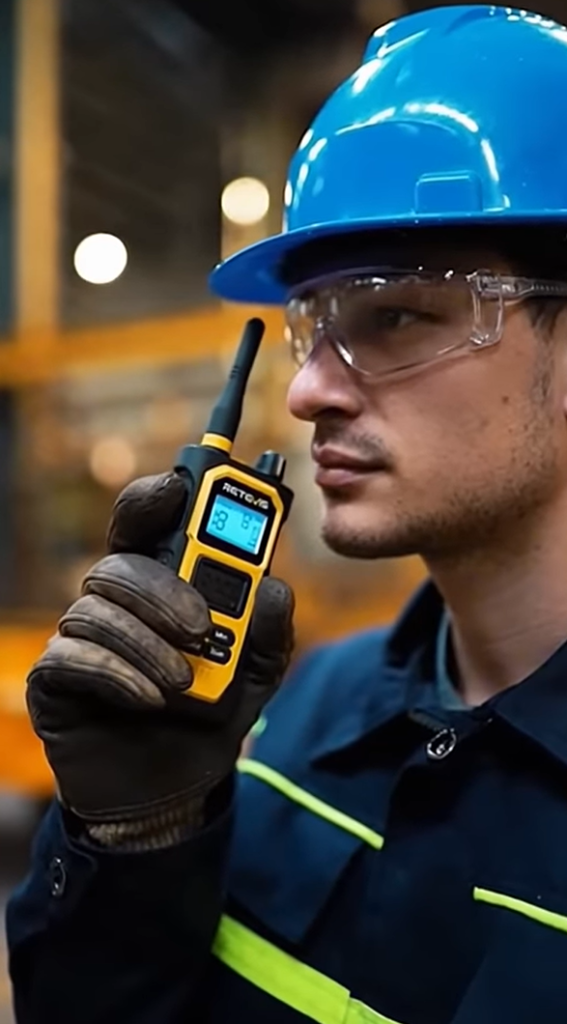
Yet despite their central role, two-way radios are still frequently treated as generic tools rather than purpose-built industrial systems. RETEVIS is challenging that mindset by introducing a structured, engineering-focused approach to jobsite communication with its Industrial Two Way Radio Communications Reliability Standard Guide—a framework designed specifically for the demands of construction sites and warehouse environments.
Paired with a complimentary, site-specific Reliability Diagnostic, this initiative aims to help operations leaders move beyond trial-and-error radio selection and toward predictable, measurable communication performance using RETEVIS Industrial Two Way Radios.
“Most communication failures aren’t random—they’re structural,” explains a RETEVIS solutions specialist. “When radios aren’t designed for the noise, layout, and physical stress of industrial environments, small breakdowns compound quickly. A misunderstood lift command or repeated call drop in a warehouse aisle can ripple into major safety and productivity losses. Our standard exists to eliminate those weak points before they cost time, money, or lives.”
Understanding the Real Communication Challenges on Industrial Sites
The RETEVIS reliability framework focuses on the most common failure scenarios across construction and warehousing, translating them into clear technical requirements instead of vague durability claims.
Construction Sites: Where Clarity and Toughness Are Non-Negotiable
Clear Audio in Extreme Noise
Construction environments routinely exceed 100 decibels, with heavy machinery, power tools, and engines competing with human speech. The reliability standard prioritizes advanced digital noise suppression and high-powered speakers that isolate and amplify the human voice. For crane operators and ground crews, hearing instructions correctly the first time is essential to preventing misalignment, rework, or serious accidents.
Resistance to Daily Physical Abuse
Drops from ladders, scaffolding, or equipment platforms are inevitable. Dust, vibration, and constant handling are unavoidable. RETEVIS Industrial Two Way Radios are evaluated against military-grade benchmarks such as MIL-STD-810H for shock, drop, and vibration resistance—positioning durability as a direct contributor to uptime, not just a marketing label.
All-Weather, All-Shift Reliability
From early-morning cold starts to scorching afternoon heat, radios must perform consistently in extreme temperatures. The standard defines wide operating temperature ranges and high ingress protection ratings (IP67/IP68) as essential, ensuring reliable performance in rain, dust, mud, and debris throughout the entire workday.
Warehouses & Distribution Centers: Solving the Hidden RF Problem
Overcoming the “Metal Canyon” Effect
Rows of steel shelving, racking systems, and stored inventory create complex radio frequency reflections and dead zones that cripple communication. RETEVIS addresses this with optimized RF design and repeater compatibility to deliver stable, full-facility coverage—keeping forklift traffic moving and pick operations uninterrupted.
Designed for Constant Motion
Warehouse staff operate at speed. Radios must support one-handed use, intuitive controls, and secure carrying options that don’t interfere with movement. The reliability standard emphasizes ergonomic design to reduce fumbling, dropped units, and operator fatigue.
Battery Performance for Long Shifts
A radio that powers down mid-shift removes a worker from the communication network entirely. The standard requires batteries capable of exceeding 12-hour operational cycles, supported by accurate charge indicators to prevent unexpected failures during peak fulfillment periods.
Shifting from Reactive Fixes to a Proactive Reliability Strategy
Rather than responding to complaints after problems arise, RETEVIS encourages operations teams to take a preventive approach through its Reliability Diagnostic. This assessment evaluates site-specific factors—noise levels, layout complexity, environmental exposure, and usage patterns—against a three-tier reliability model:
- Basic Durability – Protection against everyday wear and drops
- Environmental Tolerance – Performance across temperature, dust, and moisture extremes
- Ultimate Safety Reliability – Maximum clarity, coverage, and uptime in mission-critical conditions
The result is a clear, data-driven roadmap that helps organizations invest with confidence, align equipment capability with real-world demands, and reduce both safety risks and operational inefficiencies.
A Stronger Link in the Safety and Productivity Chain
Modern construction and logistics depend on tight coordination, fast decision-making, and uncompromising safety standards. Two-way radios remain the most immediate, human-centered communication link in that chain.
“Reliable communication should be treated with the same seriousness as structural materials or warehouse management systems,” the RETEVIS expert notes. “When radios fail, everything downstream is affected. Ensuring dependable performance isn’t optional—it’s a responsibility for any operation committed to safety, efficiency, and profitability.”
The Industrial Two Way Radio Communications Reliability Standard Guide is now available from RETEVIS for industry professionals seeking to strengthen on-site communication. Discover how RETEVIS Industrial Two Way Radios are engineered to perform under pressure—and how a reliability-first approach can prevent downtime before it starts.