Post Preview
Table Of Contents
- What To Do In The First Few Minutes
- Why Medical Care Should Come Early
- Wisconsin Crash Reporting Rules
- How To Preserve Useful Evidence
- How To Handle Insurance Calls
- What To Track During Recovery
- Common Mistakes That Can Create Problems
- When To Get Legal Guidance
- Frequently Asked Questions
- Conclusion
After a collision, fall, or other unexpected injury in Buffalo County, the decisions made in the first days can affect both physical recovery and an insurance claim. Speaking with a Buffalo County personal injury attorney may be appropriate when injuries are serious, fault is disputed, or an insurer is pressing for a quick statement or settlement.
A personal injury claim is not automatically a lawsuit. It is usually a process of documenting what happened, identifying insurance coverage, showing the nature of the injury and losses, and attempting to resolve the matter fairly. A calm, organized approach can help Buffalo County residents protect important information while focusing on recovery.
What To Do In The First Few Minutes
Safety comes before paperwork, photographs, or discussions about blame. After a motor vehicle crash, check yourself and others for injuries, call 911 when anyone may be hurt, turn on hazard lights, and move out of traffic only if it is safe to do so. Do not leave the scene unless an emergency makes it necessary.
Once immediate danger has passed, exchange identification, insurance, and vehicle information with the other driver. If the injury happened on another property, report it to the owner, manager, or employee and ask that an incident report be created. Keep the conversation factual. A scene is rarely the right place to decide fault or minimize an injury.
Why Medical Care Should Come Early
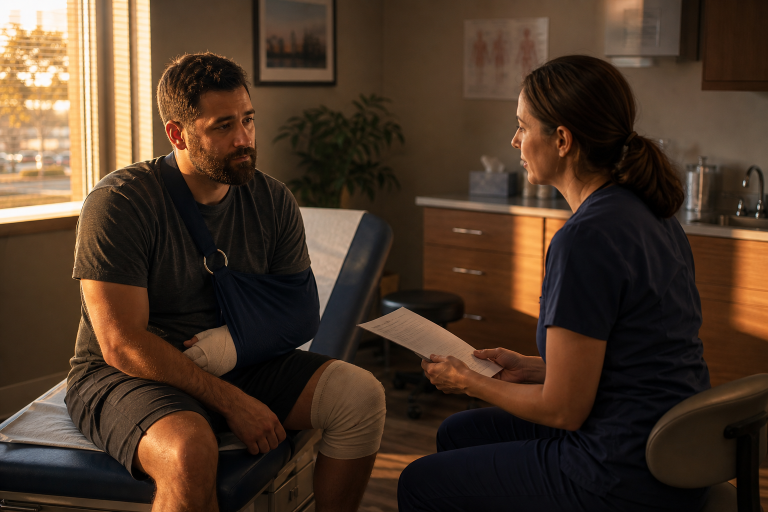
Some injuries are not obvious immediately. Pain, stiffness, headaches, dizziness, numbness, and soft-tissue symptoms may become more noticeable hours or days later. Prompt medical evaluation is primarily about protecting health, but it also creates a dated record connecting symptoms, diagnosis, treatment, and restrictions to the incident.
Be thorough with medical providers about every symptom, even if it appears minor. Follow treatment recommendations, attend follow-up appointments, keep discharge instructions, and report changes promptly. The signs and symptoms of a concussion can include physical, thinking, sleep, and emotional changes, so a possible head injury should not be dismissed simply because a person did not lose consciousness.
Helpful Medical Documentation
- Emergency room, clinic, and therapy records.
- Prescription and over-the-counter medication receipts.
- Work restrictions and disability notes.
- A daily description of pain, mobility, sleep, and limitations.
- Notes about missed events, household help, or childcare needs.
Wisconsin Crash Reporting Rules
Wisconsin requires reporting for crashes involving an injury, at least $1,000 in damage to any person’s vehicle or property, or at least $200 in damage to government-owned property other than a vehicle. When law enforcement does not prepare a report, drivers may need to complete the state form. The current Wisconsin crash reporting requirements explain what information is needed and how to submit a driver report.
Keep the report number, officer’s name, and copies of anything submitted. A crash report can be useful evidence, but it is not necessarily the final word on who was responsible or what injuries resulted.
How To Preserve Useful Evidence
Evidence can disappear quickly. Vehicles get repaired, weather changes, security footage is overwritten, and witnesses forget details. When it is safe, take wide and close photographs of vehicle damage, injuries, road conditions, warning signs, debris, property hazards, and the general location.
Also save witness names and contact information, repair estimates, towing bills, damaged clothing or personal items, and screenshots of relevant communications. Write a brief account while the event is fresh, including the time, location, direction of travel, weather, and what was said. Do not put yourself at risk to collect evidence. Safety always takes priority.
How To Handle Insurance Calls
Report the incident to the appropriate insurer in accordance with the policy requirements, but understand the difference between reporting a claim and providing a detailed recorded statement. Early in the process, the full extent of injuries, future care, lost income, and fault may not be clear.
- Give accurate facts and avoid guessing about speed, distance, or fault.
- Do not describe an injury as resolved if symptoms are ongoing.
- Ask for a claim number and save all letters, emails, and messages.
- Read releases, medical authorizations, and settlement documents before signing.
- Do not accept payment for an injury claim until the terms are understood.
What To Track During Recovery
A complete claim file includes more than medical bills. Keep receipts for prescriptions, travel to appointments, medical equipment, home assistance, vehicle repairs, towing, and other out-of-pocket costs. Record time missed from work and ask an employer to document lost wages, reduced hours, or missed opportunities when applicable.
A simple weekly journal can fill gaps that invoices do not show. For example, a person may need help lifting groceries, driving children to activities, or completing farm, home, or work tasks. These day-to-day effects may be difficult to recall months later without contemporaneous notes.
Common Mistakes That Can Create Problems
- Delaying medical care despite continuing symptoms.
- Failing to report a qualifying crash or incident.
- Posting details, photos, or activity updates on social media.
- Discarding damaged property before it is photographed or inspected.
- Missing appointments without documenting the reason.
- Ignoring correspondence that contains a deadline.
- Settling before the likely course of treatment is understood.
One misstep does not automatically end a claim. Still, careful documentation and timely communication can reduce unnecessary disputes.
When To Get Legal Guidance
Legal guidance may be especially useful when an injury is severe or permanent, responsibility is disputed, multiple parties are involved, or a commercial vehicle, government entity, child, or uninsured driver is involved. These cases can involve different insurance policies, evidence issues, and deadlines.
It may also help to seek advice before giving a recorded statement, signing broad paperwork, or deciding whether a proposed settlement accounts for future medical care and lost earning capacity. Not every injury claim requires litigation, but early guidance can clarify available options and responsibilities.
Frequently Asked Questions
Do all Wisconsin crashes need to be reported?
No. Reporting duties generally depend on injury and property damage thresholds. When in doubt, review current state instructions and preserve the information needed to file.
Should I take photos after an accident?
Yes, if it’s safe to do so. Photos of damage, injuries, road conditions, hazards, and the surrounding area can help preserve details that later change or disappear.
What if pain begins days after the incident?
Seek medical attention promptly and explain when the incident occurred, when symptoms began, and how they have changed. Delayed symptoms can still require care and documentation.
Can I repair my vehicle before the claim is finished?
Usually, but document the damage first. Keep clear photographs, repair estimates, invoices, receipts, and any inspection records.
Conclusion
Navigating a personal injury claim in Buffalo County starts with prioritizing safety, seeking medical attention, accurate reporting, and maintaining organized records. By preserving evidence, communicating carefully with insurers, and recognizing when professional guidance may be needed, injured people can make informed decisions while giving recovery the attention it deserves.