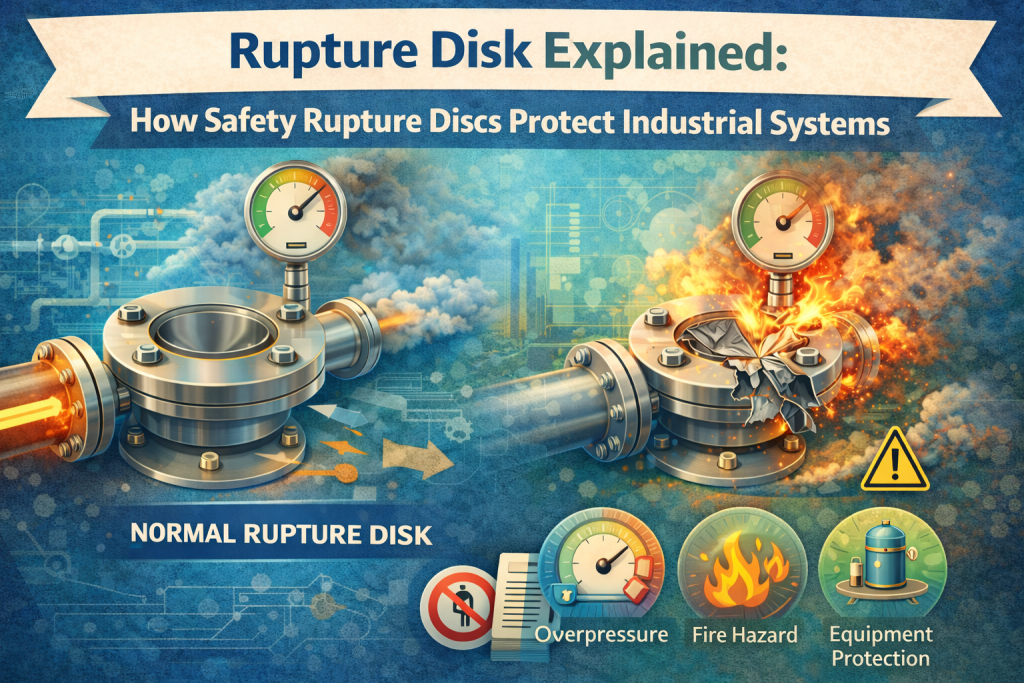
Industrial systems operate under intense pressure, extreme temperatures, and demanding conditions. When pressure control fails, the consequences can be catastrophic, ranging from equipment damage to serious safety hazards. This is where a Rupture Disk becomes a critical component in modern industrial safety design. Understanding how these devices work, why they matter, and where they are used helps engineers, plant managers, and decision-makers create safer and more reliable operations.
This article explains the fundamentals of rupture technology, explores how a safety rupture disc functions, and clarifies how it differs from other pressure relief solutions, including the widely known burst disc.
Understanding Pressure Risks in Industrial Systems
Pressure is essential in many industrial processes such as chemical manufacturing, oil and gas refining, pharmaceuticals, and power generation. However, pressure that exceeds design limits can lead to system failure. Pipes can crack, vessels can rupture, and sensitive equipment can be destroyed in seconds.
Industries manage pressure risks using engineered safety devices that release excess pressure before damage occurs. Among these devices, rupture-based protection stands out for its reliability, speed, and simplicity.
What Is a Rupture Disk?
A Rupture Disk is a non-reclosing pressure relief device designed to burst at a predetermined pressure level. Once that pressure is reached, the disk breaks instantly, allowing pressure to escape safely from the system. Unlike valves, it has no moving parts and does not reseat after activation.
This simplicity makes rupture disks extremely dependable, especially in environments where corrosion, clogging, or mechanical failure could compromise other safety devices.
The term burst disc is often used interchangeably with rupture disk, and in most industries, both names refer to the same type of pressure relief component.
How a Safety Rupture Disc Works
A safety rupture disc acts as the final line of defense in a pressurized system. It is typically installed on pressure vessels, pipelines, or reactors. The disc is engineered to rupture at a precise pressure, known as the burst pressure.
When pressure stays within safe limits, the disc remains intact and seals the system completely. If pressure rises beyond the safe threshold, the disc ruptures instantly, releasing pressure and preventing further escalation.
Key characteristics of how it works include:
- Immediate response with no delay once burst pressure is reached
- Full opening to allow rapid pressure relief
- One-time use, requiring replacement after activation
This predictable behavior is why rupture-based devices are trusted in critical applications.
Why Industries Rely on Rupture Disks
Rupture disks are valued for their reliability and precision. They are especially useful in processes where pressure relief must occur without hesitation or mechanical complexity.
Industries rely on them because they:
- Do not depend on springs, seals, or moving components
- Are unaffected by vibration or system fatigue
- Provide accurate pressure relief even under extreme conditions
- Work well with corrosive, toxic, or high-temperature media
In many facilities, rupture disks are used alongside relief valves to provide layered protection and redundancy.
Rupture Disk vs Pressure Relief Valve
While both devices protect against overpressure, they operate differently. Understanding these differences helps in selecting the right solution for each application.
A rupture disk opens fully and instantly when its pressure limit is exceeded. A pressure relief valve opens gradually and can reseat once pressure drops. Valves are reusable, while rupture disks are single-use devices.
Rupture disks are ideal when:
- Absolute leak-tight sealing is required
- Instantaneous pressure release is critical
- Media could damage valve mechanisms
Pressure relief valves are better suited when controlled, repeatable pressure relief is needed.
In many systems, engineers combine both to achieve maximum safety and operational flexibility.
Types of Rupture Disks Used in Industry
Different processes require different rupture disk designs. Manufacturers offer various types to suit specific conditions.
Common types include:
- Forward-acting disks, which burst when pressure pushes against the dome
- Reverse-acting disks, which are stronger and resist fatigue better
- Scored disks, designed to rupture along precise lines
- Composite disks, combining multiple materials for enhanced performance
Each type is engineered to meet specific pressure ranges, temperatures, and chemical compatibility requirements.
Where Burst Discs Are Commonly Used
Burst disc technology is found across a wide range of industries due to its versatility and reliability.
Typical applications include:
- Chemical reactors and storage tanks
- Oil and gas pipelines and separators
- Pharmaceutical production equipment
- Food and beverage processing systems
- Power generation boilers and turbines
In these environments, even a small pressure imbalance can lead to serious consequences, making fast-acting protection essential.
Benefits of Using Safety Rupture Discs
Choosing a safety rupture disc provides several practical advantages that extend beyond basic pressure relief.
Major benefits include:
- Zero leakage under normal operating conditions
- High accuracy in burst pressure performance
- Low maintenance due to simple construction
- Compatibility with harsh and corrosive substances
These advantages make rupture disks a cost-effective and dependable choice for long-term safety planning.
Installation and Maintenance Considerations
Although rupture disks are simple devices, correct installation is critical for proper performance. Improper mounting, incorrect torque, or incompatible materials can affect burst accuracy.
Important installation considerations include:
- Ensuring correct orientation based on disk type
- Using appropriate holders and gaskets
- Verifying compatibility with system pressure and temperature
- Following manufacturer torque specifications
After activation, the ruptured disk must be replaced before the system can return to operation. Regular inspection schedules help ensure readiness without unnecessary downtime.
Compliance and Safety Standards
Industrial safety regulations often require pressure relief systems to meet strict standards. Rupture disks are designed and tested according to international codes to ensure reliability.
Many industries follow standards such as ASME, ISO, and other regional safety guidelines. Using certified rupture disks helps facilities demonstrate compliance while protecting personnel and equipment.
How Rupture Disks Improve Overall System Safety
Beyond preventing explosions or leaks, rupture disks contribute to a culture of proactive safety. Their predictable behavior allows engineers to design systems with clear pressure limits and emergency response strategies.
By integrating rupture protection into system design, companies reduce the likelihood of unexpected failures, insurance claims, and regulatory penalties. More importantly, they protect human lives.
Choosing the Right Rupture Disk for Your Application
Selecting the correct rupture disk requires careful evaluation of operating conditions. Factors such as pressure range, temperature, chemical exposure, and installation environment all play a role.
Working with experienced manufacturers and engineers ensures the chosen disk performs as intended. Proper selection enhances safety while maintaining process efficiency.
The Future of Pressure Protection Technology
Advancements in materials science and manufacturing are improving rupture disk performance. Modern designs offer tighter tolerances, longer service life, and improved resistance to fatigue and corrosion.
As industries evolve and processes become more demanding, rupture-based safety solutions continue to adapt, reinforcing their role as essential safety components.
A Final Word on Reliable Pressure Protection
Pressure safety is not optional in industrial systems. It is a fundamental requirement for sustainable and responsible operations. Whether referred to as a Rupture Disk, a safety rupture disc, or a burst disc, this simple yet powerful device remains one of the most trusted methods of overpressure protection.
By understanding how rupture disks work and why they matter, industries can make informed decisions that protect assets, people, and productivity for years to come.