Key Takeaways
- Accurate color preserves brand identity and prevents costly errors.
- Consistent colors boost recognition, recall, and engagement.
- Use ICC profiles, calibrate devices, and proof before printing.
- Understand RGB-to-CMYK conversion for print accuracy.
- Advanced methods like G7 ensure reliable, consistent color.
Introduction
Accurate color reproduction is a pillar of exceptional print projects, ensuring not only stunning visual appeal but also faithfulness to your brand’s identity. Proper color consistency is essential for businesses looking to uphold their reputation and present a united image in the marketplace. Even small color discrepancies can lead to recognition issues and may affect customer expectations. Whether your objective is to enhance your branding, market products, or create lasting impressions, investing in precise color management is essential for any printed material. For professional guidance on achieving accurate print results, consider trusted partners like MidAmerican Printing Systems, who specialize in contemporary print solutions.
When brand materials display colors as originally intended, they project the right message to customers, partners, and stakeholders. Inconsistencies in hues may not only dilute your brand presence but can also result in costly reprints and lost opportunities. The focus on color integrity is more crucial than ever, as organizations embrace print to stand out in a digitally crowded world.
This article explores why exact color reproduction is significant for enterprises of all sizes and provides actionable advice on attaining and maintaining color accuracy throughout the print production cycle. Examples from leading sources and proven methods will help clarify why color should never be an afterthought in print projects.
From digital displays to finished print materials, preserving color precision ensures that every interaction with your brand leaves a consistent impression. This unified approach reinforces professionalism, trust, and long-term loyalty among your audience.
Why Color Accuracy Matters
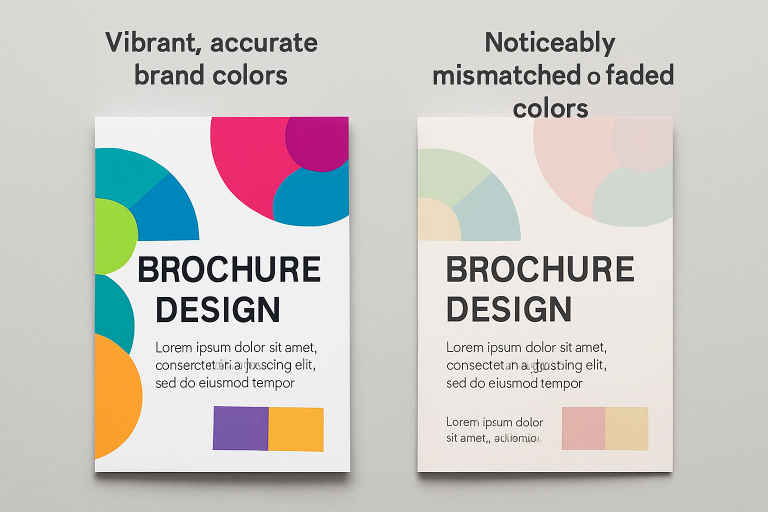
Color accuracy works at two levels. First, it preserves design intent by ensuring brand-specific colors, logos, and backgrounds appear as intended. Second, it eliminates confusion that can arise from mismatched collateral, such as marketing flyers or event graphics, where colors represent different emotions or messages. Companies lose credibility and risk their investment if colors do not match, potentially confusing the public and weakening market presence. According to Forbes, even subtle color changes can disrupt brand perception and consumer trust.
Enhancing Brand Recognition
Consistent use of color plays a vital role in connecting with customers and establishing quick brand recall. Research demonstrates that when customers see the same colors, logos, and visual styles repeatedly, their recognition and memory of the brand strengthen. Data suggests that maintaining a steady brand presentation could boost revenue by up to 23 percent. This natural, almost subconscious association is what most global brands strive for, and it all starts with rigorous control at the print production level.
Improving Readability and Engagement
Strategic color use draws attention to important parts of a print piece and facilitates easier information absorption. Using colors not only makes content attractive but also aids comprehension and encourages readers to act. Well-chosen colors can guide a viewer’s eyes to calls to action, offers, or contact information, increasing engagement and boosting results from print campaigns. Research cited by Printing News shows that color-printed documents can raise comprehension by as much as 70 percent and readership by close to 80 percent compared to black-and-white pieces.
Achieving Accurate Color in Printing
Color management in printing is a blend of technological processes and quality assurance. Here are the foundational steps every organization should follow:
- Use Standardized Color Profiles: Integrating ICC color profiles ensures colors remain consistent from digital design to print output, minimizing surprises and guaranteeing predictability.
- Calibrate Monitors and Printers: Frequent calibration is necessary to correct color drift on screens and output devices, ensuring what is seen during design is reproduced by the printer.
- Conduct Prepress Proofing: Modern proofing techniques allow testing color fidelity before the main production run, catching and fixing variations early and saving time and resources.
Understanding Color Models
Color models serve as the language of digital and print designers. The two most prominent systems are:
- CMYK: Used for traditional printing, this model relies on cyan, magenta, yellow, and black inks. Each color is created by layering combinations of these four inks on paper.
- RGB to CMYK Conversion: Digital artwork is often created in RGB (red, green, blue) for screens but needs to be converted to CMYK for print. As not all digital colors can be reproduced in print, conversion and soft-proofing help ensure colors look as anticipated in the final output.
Leveraging Advanced Printing Technologies
Advancements in technology have made precise color reproduction more accessible and reliable across a variety of printing processes and materials. One significant breakthrough is the G7 calibration method, a process embraced by professional print shops worldwide to produce visually consistent color through industry-standard calibration and monitoring. The G7 method uses neutral grays and specific measurement targets to guarantee color accuracy, regardless of project complexity or material type.
Final Thoughts
Achieving precise color in print projects safeguards your investment, reinforces branding, and enhances the impact of your printed marketing materials. By understanding the rationale behind color accuracy, employing robust color management practices, and leveraging the latest print technologies, brands ensure their materials consistently meet or exceed expectations. Proper color not only attracts attention but also communicates trust and professionalism, turning every print piece into an opportunity for connection and growth.