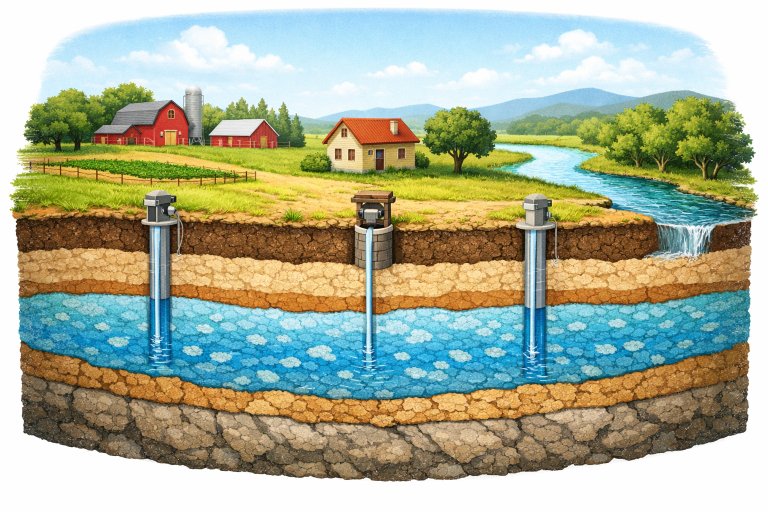
Groundwater is one of the most crucial natural resources on Earth, providing essential water for drinking, agriculture, and ecosystems. As demands increase and climate variability intensifies, accurate assessment and sustainable management of groundwater have never been more important. For communities, industries, and policymakers interested in understanding this vital process, the study of hydrogeology offers a gateway into the complex interactions between water, soil, and rock below the surface.
Sustainable groundwater management requires robust scientific methods to evaluate groundwater availability and quality. With populations growing and water use on the rise, having a foundational knowledge of groundwater assessment is essential to safeguard future supply for homes, farms, and industries.
Reliable groundwater management begins with proper investigation and data collection. These steps help decision-makers understand aquifer characteristics, recharge rates, and potential sources of contamination. Furthermore, challenges such as over-extraction, pollution, and climate change make systematic and ongoing assessment a necessity rather than an option.
A fundamental part of groundwater investigation is site characterization, which involves analyzing subsurface conditions and identifying key geologic features that affect groundwater movement and storage. This approach strengthens groundwater management strategies by providing accurate, site-specific information.
Importance of Groundwater
Groundwater is estimated to comprise roughly 30 percent of all freshwater resources on the planet, making it an indispensable source of water for people, agriculture, and industry. In areas where surface water is scarce or subject to seasonal fluctuations, groundwater is often the primary water source. Its reliability during droughts and dry seasons underlines its significance to communities and ecosystems. Additionally, groundwater helps sustain rivers and wetlands by providing baseflow, thereby supporting biodiversity and ecosystem health.
Methods of Groundwater Assessment
Quantifying and monitoring groundwater relies on a combination of physical, chemical, and technological tools. Hydrogeological surveys are at the heart of most investigations, mapping aquifer extents and identifying recharge and discharge zones. Geophysical methods, such as electrical resistivity and seismic surveys, enable non-invasive subsurface exploration and provide data on aquifer geometry and structure.
- Hydrogeological Surveys: These involve drilling observation wells, measuring water-table elevations, and interpreting aquifer-test data to estimate properties such as permeability and storativity.
- Geophysical Methods: Techniques such as electrical resistivity tomography and ground penetrating radar aid in mapping aquifer systems without extensive drilling.
- Remote Sensing: Satellite-based monitoring helps detect changes in groundwater storage across large areas, supporting drought monitoring and regional planning.
- Water Quality Testing: Regular collection and analysis of groundwater samples ensures supplies are safe for consumption and identifies any emerging contaminants.
Collectively, these assessment strategies inform management decisions and guide policy development by providing reliable, up-to-date groundwater data.
Challenges in Groundwater Management
Despite technological advances, numerous challenges hamper effective groundwater management. Over-extraction, particularly for irrigation and urban use, leads to falling water tables and, in some cases, land subsidence that can damage infrastructure. Contamination from agricultural runoff, industrial activities, and inadequate waste disposal can impair groundwater quality, rendering supplies unsafe for drinking or irrigation.
- Over-extraction: Excessive pumping reduces groundwater levels and may permanently impact aquifer storage capacity.
- Contamination: Pollutants such as nitrates, pesticides, and heavy metals threaten water quality and public health.
- Climate Change: Shifts in precipitation patterns and increased frequency of extreme weather events impact natural recharge processes.
- Data Scarcity: Inadequate monitoring and reporting make it difficult to assess trends and plan effectively.
Addressing these issues requires coordinated efforts, investment in monitoring infrastructure, and adoption of best practices for water use and pollution control.
Role of Technology in Groundwater Assessment
Recent technological breakthroughs have transformed the field of groundwater assessment. Geographic Information Systems (GIS) enable the storage, analysis, and visualization of spatial groundwater data, simplifying complex decision-making processes. Artificial Intelligence (AI) and machine learning models improve predictions for groundwater availability and help assess risks from over-extraction or contamination incidents. The use of Internet of Things (IoT) solutions, including networks of remote sensors, provides real-time groundwater monitoring and early warning for drought or pollution events.
- GIS: Integrates and layers multiple datasets, allowing for powerful spatial analysis and mapping of aquifer properties.
- AI: Supports predictive modeling of aquifer response to various management scenarios and climatic conditions.
- IoT: Remote sensors continuously capture water-level and quality metrics, improving data accuracy and enabling more agile data management.
Integrating these technologies not only boosts efficiency but also supports data-driven planning and adaptive management.
Policy and Regulatory Frameworks
Government frameworks are essential for effective groundwater management. Laws like the Sustainable Groundwater Management Act (SGMA) require the development of localized, long-term plans for groundwater sustainability. Successful regulatory frameworks depend on engaging stakeholders, clearly defining rights and responsibilities, and providing mechanisms to adapt plans as new data or challenges arise. Creating enforceable regulations is crucial to prevent overuse and pollution, ensuring that groundwater supplies are preserved for future generations.
Community Involvement and Education
Public participation is essential to sustainable groundwater. Educational programs raise awareness of best practices such as water conservation, pollution prevention, and responsible well maintenance. Involving local stakeholders in groundwater planning not only increases transparency but also fosters a sense of ownership and stewardship. When communities are equipped with knowledge and tools, they are more effective partners in safeguarding water resources over the long term.
Conclusion
Groundwater assessment and management are inseparable from the Sustainable Development Goals. Communities and leaders must combine rigorous scientific assessment, the latest technological advances, effective policies, and grassroots involvement to maintain this irreplaceable resource. By understanding, monitoring, and responsibly managing groundwater, we help ensure its vitality and availability for generations to come.