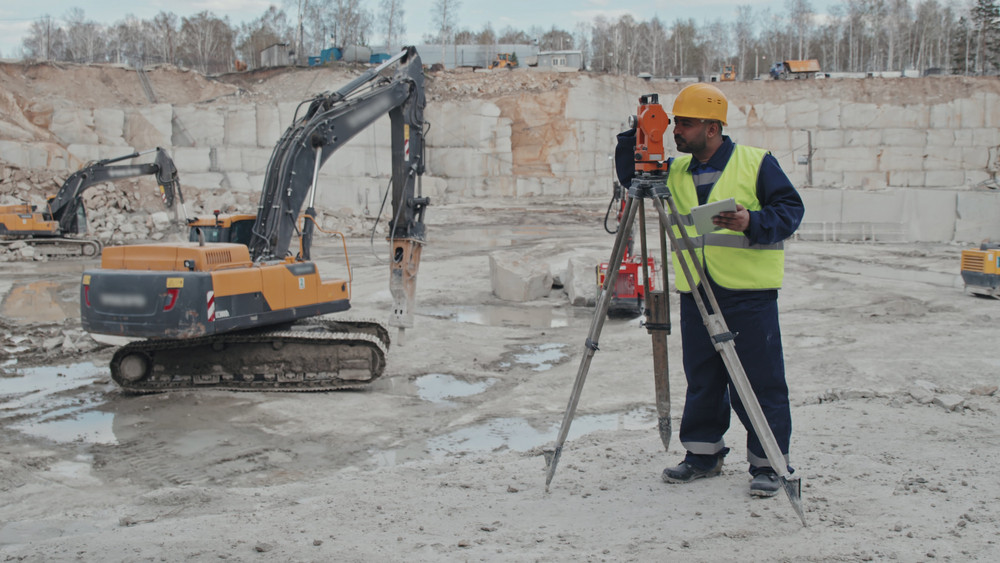
Excavation contractors play a vital role in construction projects of every scale. These professionals prepare sites for buildings, pipelines, utilities, roads, and more by moving earth, handling soil, and shaping landscapes. Yet despite their importance, misconceptions persist about what excavation contractors actually do and what their work entails.
In this article, we explore three prevalent myths about excavation contracting. We will set the record straight on widely held assumptions about industry size, financial impact, and safety practices. By understanding the realities behind these myths, business owners, property developers, and project managers can make more informed decisions when planning earthwork and groundwork.
Myth 1: Excavation Contracting Is a Niche Industry
One common belief is that excavation contracting is a niche or limited trade within the construction sector. In fact, excavation contracting is a widespread and significant segment of the construction economy.
There are approximately 238,021 excavation contractor businesses actively operating in the United States, according to IBISWorld. This number reflects firms that specialize in soil removal, grading, trenching, site preparation, and related earthmoving activities. The count of over two hundred thousand businesses clearly illustrates how many contractors focus on earthwork and excavation services alone.
This breadth of participation matters for those seeking a contractor. A robust seller landscape means clients can often compare multiple providers for quality, price, and availability. It also suggests that excavation contracting supports a large network of suppliers, equipment vendors, and subcontract professionals who contribute to construction projects nationwide.
The next time you assume excavation is a minor trade, consider how many businesses depend on these services to deliver the foundations of modern infrastructure.
Myth 2: Excavation Doesn’t Contribute Significant Economic Value
Another misconception is that excavation work has little economic impact beyond basic construction tasks. In reality, the sector generates substantial revenue each year.
According to NIP Group, the excavation and earthmoving industry produces roughly $119 billion annually, representing the total market value of site preparation and groundwork across commercial, industrial, residential, and public projects.
This level of revenue shows that excavation contracting is far more than a supporting service. It influences project budgets and timelines from the outset and supports equipment manufacturers, rental firms, heavy machinery operators, and a skilled workforce.
When business leaders assess project costs, acknowledging the true financial scale of excavation services helps prevent planning and budgeting issues.
Myth 3: Soil Classification Isn’t That Important
A final myth is that soil classification is a minor aspect of excavation safety and planning. This misunderstanding can lead to serious safety risks and regulatory compliance issues.
Excavation and trenching safety standards require precise categorization of soil types to manage risk. OSHA recognizes three classifications for soil: Type A, Type B, and Type C, according to Urbint. Determining which category soil falls into is not arbitrary. Each classification has defined characteristics related to cohesion, moisture content, and particle size that influence how soil behaves under load or when exposed in an excavation face.
Identifying soil type correctly is essential because it drives decisions about protective systems such as sloping, benching, shoring, and shielding. The responsibility for accurate classification lies with the competent person on the jobsite. A competent person is defined by OSHA as an individual who can identify hazards and has the authority to take corrective action. Improper classification can lead to cave-ins, equipment instability, worker injury, and potential regulatory fines.
Understanding this dispels the notion that soil type is a minor technicality. In truth, it is a fundamental safety requirement that directly affects worker protection and project execution.
Excavation contracting is vital to modern construction, yet myths about the industry persist. By separating myth from fact, project stakeholders can approach excavation contracting with a clearer understanding of its scale, financial impact, and safety imperatives. Whether you are a developer, contractor, or facility owner, this insight supports stronger project planning and more effective risk management.