The medical device industry operates under a simple but demanding principle: reliability is non-negotiable. Every component that goes into a surgical instrument, a diagnostic device, or an implantable system must perform exactly as designed, every single time. There is no room for variation, no tolerance for failure, no acceptance of “close enough.” This is why material selection and machining precision have become central to how medical devices are engineered and manufactured.
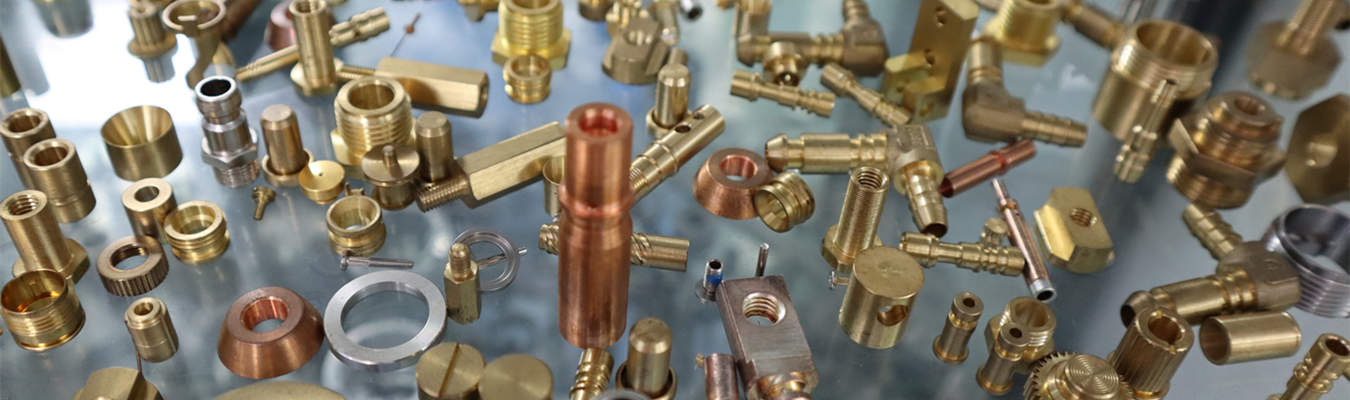
Among the materials that have proven indispensable in medical applications, brass and copper alloys occupy a unique position. Their combination of conductivity, corrosion resistance, machinability, and antimicrobial properties makes them ideal for a wide range of healthcare applications—from electrical connectors in diagnostic equipment to fluid control components in surgical tools. And as medical devices continue to miniaturize and become more sophisticated, the demand for precision machined brass and copper components has never been greater.
Why Brass and Copper Matter in Medical Manufacturing
Brass and copper alloys offer properties that few other materials can match. Copper is one of the most conductive metals available, making it essential for electrical connections in medical equipment where signal integrity and reliability are critical. Its natural antimicrobial properties have also gained attention in healthcare settings, with copper-based materials demonstrating effectiveness in reducing bacterial colonization on surfaces and components.
Brass, an alloy of copper and zinc, combines excellent machinability with good strength and corrosion resistance. It is particularly well-suited for precision turned components such as connectors, fittings, and micro-shafts. In medical devices, brass components are found in everything from fluid control systems to diagnostic instruments, where dimensional accuracy and surface finish directly affect performance and reliability.
What makes these materials particularly valuable is their ability to be machined to extremely tight tolerances. Copper and brass can be turned, milled, and drilled with a level of precision that allows manufacturers to produce components with features measured in thousandths of a millimeter. This capability is essential for the miniaturized components that characterize modern medical devices—implantable sensors, minimally invasive surgical tools, and portable diagnostic equipment.
The Swiss Machining Advantage for Medical Components
Not all machining processes are equal when it comes to producing high-precision brass and copper components. Swiss-type turning, originally developed for the watchmaking industry, has become the technology of choice for complex, high-tolerance parts. Unlike conventional lathes where the workpiece extends unsupported from the chuck, Swiss machines feed material through a guide bushing positioned immediately adjacent to the cutting tool. This design eliminates deflection and vibration, making it possible to hold tolerances as tight as ±0.001mm on parts that would be impossible to produce accurately on conventional equipment.
For medical device manufacturers, this capability translates directly into product quality. A brass connector that must maintain signal integrity in a diagnostic device cannot afford dimensional variation. A copper component in an implantable system must meet exacting specifications for both size and surface finish. Swiss machining delivers the consistency required for these demanding applications, with the added benefit of high-volume production capability through automated bar feeding and lights-out manufacturing.
From Raw Material to Finished Component
Producing medical-grade brass and copper components involves more than just machining. Every step of the process must be controlled and documented to ensure that the final part meets its specifications. This begins with material selection—medical applications typically require specific alloys with documented chemical composition and mechanical properties. Traceability is essential, with each batch of material tracked from receipt through final inspection.
The machining process itself must be carefully optimized for each alloy. Copper’s tendency to produce long, stringy chips requires specific tool geometries and chip-breaking strategies. Brass, while more forgiving, demands sharp tooling and effective coolant application to achieve the surface finishes required for medical applications. In-process inspection ensures that dimensions remain within tolerance throughout the production run, with statistical process control tracking variation and identifying trends before they lead to non-conforming parts.
Secondary operations are often required to achieve the final specifications. Surface treatments may include passivation, polishing, or plating to enhance corrosion resistance, improve biocompatibility, or achieve specific aesthetic requirements. Cleaning procedures must remove all machining residues to prevent contamination. Inspection at every stage verifies that the part meets all dimensional and functional requirements before release.
A Partner with Brass and Copper Expertise
For medical device manufacturers, selecting a machining partner with specific expertise in brass and copper components has become a strategic priority. Not every shop understands the material behavior of these alloys or can achieve the required tolerances consistently. The best partners bring not only advanced equipment but also a deep understanding of how to optimize processes for each specific alloy and application.
This expertise shows up in practical ways. A partner who has worked extensively with copper understands how to manage its tendency to smear rather than shear cleanly. They know which tool geometries prevent the long, stringy chips that can wrap around cutting tools and disrupt automated production cycles. They have documented speeds and feeds that balance productivity with tool life, and they understand how coolant selection and delivery affect surface finish on both copper and brass components.
For brass, the challenges are different but equally real. While brass is more free-cutting than copper, it still demands sharp tooling and effective chip evacuation to achieve the clean surfaces that medical applications require. An experienced shop knows that different brass alloys—free-cutting brass, forging brass, or leaded brass—each behave differently under cutting forces. They have developed process parameters that account for these variations and can transition between alloys without sacrificing quality or consistency.
Beyond the machining itself, a true partner brings value through design collaboration. When a medical device company sends a drawing for a brass or copper component, an expert shop may suggest modifications that improve manufacturability without affecting function. They might recommend a slight radius change that extends tool life, or propose an alternative alloy that machines more predictably while meeting the same performance requirements. This kind of engineering support is not something a commodity supplier offers—it is the mark of a partner who understands that the goal is not just to produce a part, but to produce it reliably and cost-effectively over the long term.
Quality systems are another area where expertise becomes visible. Medical device manufacturers operate under strict regulatory requirements, and their suppliers must meet equally stringent standards. A partner with deep experience in brass and copper machining maintains full material traceability, documenting every batch from receipt to final inspection. They implement in-process probing to catch dimensional drift before it produces non-conforming parts. They maintain statistical process control records that demonstrate process capability and consistency across production runs. For the medical device manufacturer, this documentation is not just paperwork—it is evidence that the supplier can be trusted to deliver components that meet specifications, every time.
The inspection protocols for medical-grade components are particularly demanding. Surface finish measurements, dimensional verification, and cleanliness inspections are performed according to documented procedures. A shop with real expertise in copper and brass has the metrology equipment and trained personnel to perform these inspections accurately, and they understand what the results mean for the functionality of the finished part. They can identify the subtle signs of tool wear or process drift that might escape a less experienced operator.
This combination of equipment, process knowledge, and quality systems is what separates capable suppliers from the rest. It is the difference between a component that meets specification and one that exceeds expectations. For medical device companies, that difference can affect product performance, regulatory compliance, and ultimately patient safety.
As medical devices continue to advance, the role of custom precision machining brass parts will only grow. The materials that have proven their value across decades of medical applications will continue to be essential to the next generation of diagnostic, therapeutic, and implantable devices. And the machining partners who have invested in mastering these materials will be the ones enabling that progress.