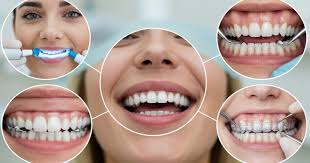
You might be feeling self conscious every time you smile, chew, or even talk. Maybe a chipped tooth from years ago still catches your eye in the mirror, or you avoid certain foods because biting down feels risky. You know it is not “just cosmetic,” because it affects how you eat, how you speak, and how you show up in front of other people, and a Lutz dentist can help you address these concerns.
If that sounds familiar, you are not alone. Many people live with worn, stained, cracked, or missing teeth for years. They put off care because they worry about cost, pain, or not knowing which treatment is right. Because of this tension, you might wonder if cosmetic dentistry is only about looks or if it can truly restore how your mouth works.
The short answer is that modern cosmetic dental procedures can do both. They can improve the appearance of your smile and also strengthen your bite, protect weakened teeth, and make everyday life easier. Below, you will see four common treatments, how they help, what to consider, and how to start sorting out what might fit your situation.
When your smile affects more than confidence, what is really going on?
It often starts small. A tooth darkens after a root canal. A filling at the front of your mouth stains. A crown from years ago no longer matches your other teeth. Then you notice you are smiling with your lips closed in photos or chewing only on one side.
The problem is not only appearance. When teeth are chipped, worn, or missing, your bite can shift. That can create uneven pressure on your jaw joints and remaining teeth. You may get headaches, jaw soreness, or teeth that break more easily. There is also the quiet stress of feeling “less like yourself” when you smile or laugh.
On top of this, there is the financial and emotional weight. You might think, “What if I spend the money and I still do not like how it looks” or “What if I choose the wrong option and it fails.” Those are valid fears. Cosmetic dentistry is an investment in both function and appearance, and you deserve to understand what you are choosing.
So, where does that leave you? It helps to look at a few of the most common smile restoration treatments and see how they work in real life.
Which cosmetic dental procedures can restore both function and aesthetics?
Every mouth and story is different. That said, four treatments show up again and again when people want both strength and beauty in their teeth.
1. Dental crowns for cracked, weakened, or heavily filled teeth
A crown is a custom “cap” that covers the entire visible part of a tooth. It is often used when a tooth is cracked, has a very large filling, or has had a root canal. Instead of patching the tooth again, a crown surrounds it, so you can bite and chew with more confidence.
Functionally, crowns help distribute biting forces evenly, which can reduce the risk of further cracking. Aesthetically, modern ceramic and porcelain crowns can be shaped and shaded to match your other teeth very closely. Materials science in dentistry continues to improve, with research into stronger and more natural looking options supported by organizations such as the National Institute of Dental and Craniofacial Research.
Imagine a molar that has been patched three times. You chew carefully on the other side, and every popcorn kernel feels risky. A well made crown can turn that tooth back into a dependable part of your bite, while also blending in visually.
2. Porcelain veneers for worn, chipped, or uneven front teeth
Veneers are thin shells that cover the front surface of teeth, usually in the smile zone. They can correct discoloration that does not respond to whitening, close small gaps, and reshape teeth that are short, chipped, or slightly crooked.
From a functional standpoint, veneers can protect worn enamel and create a more even bite surface. This can make your teeth less prone to chipping and can improve how your upper and lower teeth meet. From an appearance standpoint, veneers are one of the most effective ways to change the overall look of your smile, which is why many cosmetic dentistry clinics, such as those described by Columbia University’s dental services, include them among their core treatments.
Picture front teeth that are slightly rotated, with old bonding that has stained over time. You avoid bold lipstick or close up photos because your eyes always go straight to your teeth. A set of carefully planned veneers can give you a more uniform, natural smile and also a smoother surface that is easier to clean.
3. Dental implants to replace missing teeth
When a tooth is missing, you lose more than the visible part. The jawbone in that area can shrink, nearby teeth may shift, and chewing on that side becomes less effective. Implants are small titanium posts placed in the jawbone, which then support a crown, bridge, or denture.
Functionally, implants restore your ability to bite and chew in the area where the tooth was lost. They also help maintain bone volume by transmitting chewing forces to the jaw. Aesthetically, an implant crown is designed to look like a natural tooth emerging from the gum.
Imagine you have a missing lower molar. You chew mostly on the other side, that side wears faster, and food gets trapped in the gap. Replacing that tooth with an implant supported crown can balance your bite again, protect other teeth, and close a visible space when you smile or laugh.
4. Tooth colored fillings and bonding for small defects and cavities
Tooth colored composite fillings and bonding materials are used to repair cavities, chips, and worn edges. They bond directly to the tooth surface and can be shaped to restore natural contours.
From a functional view, these materials restore strength where decay or chipping has removed structure. They can also seal and protect sensitive areas. From an aesthetic view, they can be matched to the shade of your teeth, avoiding the gray look of older metal fillings. The move toward modern composites is reflected in patient oriented resources such as MedlinePlus information on dental fillings.
Consider a small chip on a front tooth from biting a fork years ago. It might not hurt, but it catches light and makes the tooth look uneven. A well placed bonding repair can smooth the edge, restore the original shape, and strengthen that area in a single visit.
How do these cosmetic options compare in real life?
Because you are trying to balance cost, durability, comfort, and appearance, it can help to see the big picture side by side. Every case is unique, but the comparison below offers general guidance.
| Treatment | Main Purpose | Typical Use | Longevity (with good care) | Impact on Appearance |
|---|---|---|---|---|
| Crowns | Strengthen and protect weakened teeth | Cracked, heavily filled, or root canal treated teeth | 10 to 15 years or more | High. Can closely match natural teeth |
| Veneers | Reshape and improve visible front teeth | Discoloration, minor misalignment, worn or chipped edges | 10 to 15 years on average | Very high. Major change to smile aesthetics |
| Implants | Replace missing teeth and support bone | Single or multiple missing teeth | 15 years to lifetime for the implant, crown may need replacement | High. Can look like natural teeth at the gumline |
| Tooth colored fillings / bonding | Repair small defects and cavities | Small to medium decay, chips, worn edges | 5 to 10 years on average | Moderate to high. Blends with tooth but can stain over time |
Seeing this, you might realize that restorative and cosmetic dentistry is less about choosing a “fancy” option and more about matching the right tool to the right problem.
What can you do now to move from confusion to a clear plan?
Knowing your choices is helpful, but you still need a way forward. Here are three concrete steps you can take, even if you are not ready to start treatment yet.
1. List what bothers you functionally and cosmetically
Before you see a general dentist, write down two short lists. On the first, note what affects daily function. For example, “I avoid chewing on the left side” or “My dentures move when I talk.” On the second, note what affects how you feel about your appearance, such as “I cover my mouth when I laugh” or “This dark tooth shows in every photo.”
This simple exercise helps your dentist understand your priorities. It also keeps the conversation from focusing only on what shows on X rays, and includes what you feel in real life.
2. Ask targeted questions about options, costs, and lifespan
In your visit, ask your dentist to walk you through at least two treatment paths. For example, “What would you recommend if we focus on durability” and “What would you recommend if we focus on appearance, within a budget.” Ask how long each option tends to last, what maintenance it requires, and whether insurance covers any part of it.
This turns a vague “You need cosmetic work” into a clearer comparison. It also helps you see whether you want to stage treatment over time, starting with what affects function most.
3. Give yourself permission to pause and plan
You do not have to agree to everything on the spot. Take any written treatment plan home. Review it when you are calm. You might choose to start with one or two cosmetic dental procedures that protect at risk teeth, then plan appearance focused changes over the next year or two as your budget allows.
If something feels confusing, call the office and ask for clarification. A good general dentist will respect that you are making a significant health and financial decision and will help you understand your choices without pressure.
Moving toward a smile that works well and feels like you
You do not have to choose between a healthy mouth and a smile you feel proud of. Modern cosmetic and restorative dentistry can often give you both. Crowns, veneers, implants, and tooth colored fillings are not about chasing perfection. They are about helping you eat comfortably, protect your remaining teeth, and see a reflection that feels more like who you are.
It is okay if you feel nervous, overwhelmed, or unsure where to start. The next step is simply to have an honest conversation with a trusted general dentist, share what you are experiencing, and explore your options at your own pace. Over time, small, well chosen treatments can add up to a smile that not only looks better, but works better every single day.