Key Takeaways
- Successful exterior painting begins with a detailed inspection and repair plan.
- Moisture, failing caulk, damaged wood, and loose paint should be corrected before new coatings are applied.
- Louisville weather can change quickly, so scheduling should account for rain, humidity, sun, wind, and overnight temperatures.
- Paint, primer, sheen, and color should suit the specific exterior material and the property’s exposure.
- Seasonal maintenance helps catch small defects before they become larger repair projects.
Exterior paint does more than refresh curb appeal. It helps protect siding, trim, doors, and other exposed surfaces from the everyday effects of sunlight, rain, changing temperatures, and organic buildup. In Louisville, Kentucky, a paint project should be planned as practical property maintenance rather than simply a quick color update.
For homeowners and property managers who need exterior painting Louisville, H.F. Steilberg Painting offers residential and commercial exterior painting for properties in Louisville and surrounding areas, including the Southern Indiana metro region. Its exterior painting service focuses on a careful, professional approach to projects of varying size, making the company a relevant local resource when preparation, repairs, and finished appearance all need to work together.
Why Exterior Paint Planning Matters
A rushed repaint can leave behind the problems that caused the old coating to fail. Peeling paint, open joints, soft wood, and damp surfaces do not disappear beneath a fresh coat. A thoughtful plan helps define the scope of repair, select suitable products, protect landscaping, and create a workable schedule before ladders, brushes, or sprayers come out.
It also gives homeowners a better basis for comparing estimates. Rather than comparing paint prices alone, compare what each proposal includes for cleaning, scraping, sanding, caulking, priming, repairs, protection, and cleanup.
Start With a Full Exterior Inspection
Walk slowly around the property in daylight and take notes or photos as you go. Check more than the most visible front-facing wall. The shaded side, roofline details, porch structure, and areas behind shrubs often reveal the most useful clues about maintenance needs.
- Look for peeling, bubbling, cracking, chalking, and faded paint.
- Inspect siding, trim, doors, shutters, soffits, porch rails, and window surrounds.
- Press gently on suspicious wood to identify soft or deteriorated areas.
- Check around gutters, downspouts, hose connections, roof edges, and windows for staining or water entry.
- Note loose boards, open joints, damaged masonry, and caulk that has separated from the surface.
Fix Moisture Problems Before Painting
Paint failure can be a visible symptom of a drainage or water-management issue. Overflowing gutters, leaking roof components, poor grading, failed flashing, or persistently damp landscaping can all create conditions that undermine a coating system. Find and correct the source before painting.
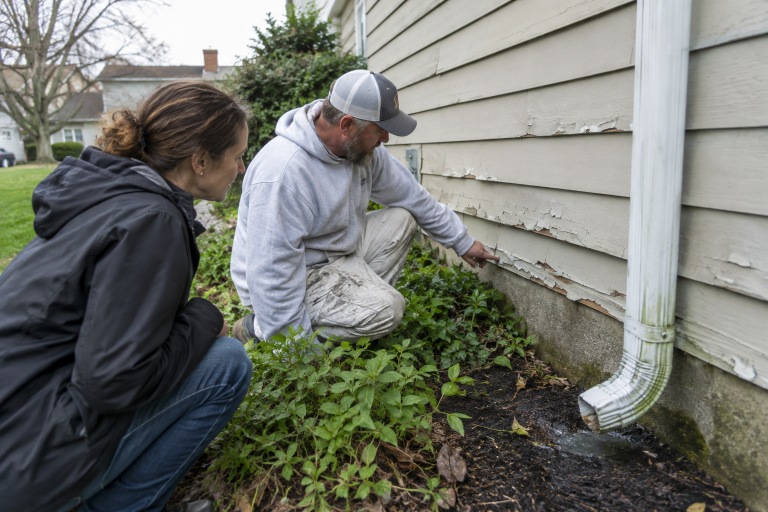
New paint should not be used to seal in wet wood or damp siding. Give washed surfaces, rain-exposed areas, and shaded walls enough time to dry, then reassess them before priming. Older homes deserve special caution as well. If a home was built before 1978, review the lead-safe renovation practices for older painted surfaces before scraping, sanding, or hiring work that could disturb existing coatings.
Build a Strong Surface Preparation Plan
Preparation often determines whether a finish performs well beyond the first season. The sequence can vary by material and condition, but most exterior projects follow the steps below.
- Clean the exterior: Remove dirt, pollen, mildew, loose debris, and chalky residue.
- Allow drying time: Confirm the surface is dry before moving forward.
- Scrape and sand failing paint: Remove loose material and feather the edges into sound paint.
- Repair damaged components: Address rotten wood, loose trim, broken siding, and deteriorated masonry before coating.
- Caulk appropriate gaps: Seal joints around trim, windows, and doors where flexible exterior caulk is suitable.
- Prime bare and repaired areas: Use a compatible primer as recommended by the paint manufacturer.
- Protect the surroundings: Cover plants, walkways, furniture, fixtures, and glass before work begins.
Choose Paint for the Surface and Setting
Wood, fiber cement, vinyl, aluminum, masonry, and metal do not all require the same coating approach. Product labels and manufacturer instructions should guide compatibility, surface preparation, application method, and drying conditions. A coating that works well on wood trim may not be the appropriate choice for a masonry wall or metal railing.
Think About Sun and Sheen
Sun exposure can make darker colors and high-traffic surfaces especially demanding. Flat and low-luster finishes can soften imperfections on broad siding, while satin or semi-gloss finishes are often used on trim, doors, and railings for greater definition and easier cleaning. Test the complete color and sheen combination on a sample board or an inconspicuous area before committing.
Pick a Color That Works With the Property
Exterior color should relate to the parts of the property that will remain in place, including brick, stone, roofing, driveways, landscaping, and neighboring homes. Large sample areas provide a more useful preview than a small paint chip. View them in morning, afternoon, and evening light because the same color can look different as light and shade shift.
For historic homes and homes within an association, confirm any color restrictions before ordering paint. A lighter main color can create a softer visual effect, while deeper colors may work well for doors, shutters, and architectural accents.
Plan Around Louisville Weather
Louisville’s four-season conditions call for flexible scheduling. Rain, heavy dew, high humidity, direct sun, wind, and sudden temperature changes can affect application and drying. Review the daytime and overnight forecasts, particularly when the project includes washing, priming, caulking, or multiple coats. The Louisville climate information maintained by the National Weather Service can also help property owners understand local seasonal patterns.
Do not assume that a comfortable afternoon means every wall is ready. A shaded north-facing wall, covered porch area, or surface near dense vegetation may remain cool or damp longer than an exposed wall. Build extra time into the plan instead of forcing the work into one fixed day.
Know When Professional Help Makes Sense
Some projects are better handled by an experienced painting contractor, especially when safe access, repair coordination, or specialized preparation is involved. Consider professional help for multi-story homes, extensive peeling, wood rot, damaged masonry, detailed historic trim, occupied commercial buildings, or work that may disturb older coatings.
Questions to Ask Before Hiring a Painter
- What repairs are needed before painting starts?
- How will landscaping, windows, walkways, and fixtures be protected?
- Which primer and finish coats are recommended for each surface?
- How will weather delays be handled?
- How many coats are included in the scope?
- Does the estimate include scraping, sanding, caulking, cleanup, and touch-ups?
- Who will complete the final inspection?
Simple Exterior Paint Maintenance Plan
Inspect painted surfaces each spring and fall. Keep gutters and downspouts clear, trim plants away from siding, clean organic buildup, and touch up small chips before the exposed material deteriorates. Record the project date, paint colors, product names, and areas repaired so future maintenance is easier to plan.
Final Checklist Before the First Coat
- The exterior is clean, dry, and free of loose paint.
- Damaged wood, siding, and trim have been repaired.
- Suitable gaps have been caulked and bare areas primed.
- Plants, windows, fixtures, and walkways are protected.
- The selected products match the surface and project conditions.
- The forecast allows time for application and drying.
- Cleanup and final inspection are part of the project plan.
A durable exterior paint job in Louisville starts long before the first coat. Careful inspection, moisture control, thorough preparation, appropriate materials, and weather-aware scheduling can help protect the property and produce a finish that looks well cared for through every season.