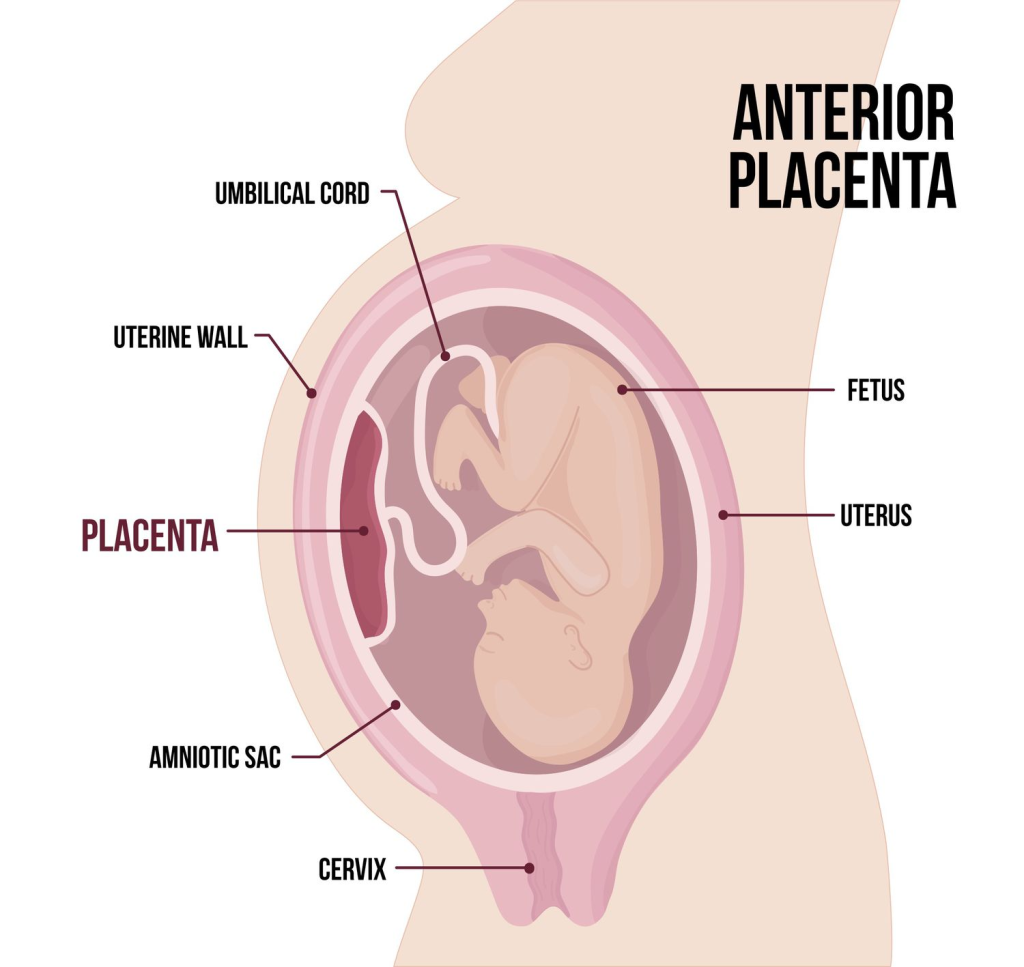
If you’ve been told you have an anterior placenta while you’re pregnant, you may be confused or even worried. The name sounds technical, but the condition itself is normal and not typically harmful. It just means your placenta is on the front of your uterus, close to your tummy. This can interfere with how you feel your baby kicking just slightly, especially how you feel the baby’s movements.
Ayurveda, the classical Indian art of living and of health, possesses soft and natural ways to care for your body during pregnancy. They are all focused on preserving the health and balance of both mother and baby, especially where subtle variations like an anterior placenta come into play.
Understanding Anterior Placenta in Simple Terms
During a normal pregnancy, the placenta may be at the back (posterior), front (anterior), top (fundal), or even low-lying. If anterior, the placenta acts as a cushion between your front and baby. Because of this, some women feel fewer or slower movements, especially early on in pregnancy. This doesn’t usually hurt you, but it’s nice to be aware and have regular check-ups.
Many of the mothers who asked on Ask Ayurveda about the condition looked for safe and natural ways to ease their pregnancy. And that’s where Ayurveda steps in—with actual, personalized care.
Ayurvedic Care for a Healthy Pregnancy with Anterior Placenta
In Ayurveda, pregnancy is a holy period, and the mother is treated as a vessel for two lives—both of whom are more or less connected. The ancient Ayurveda texts provide a special set of rules called Garbhini Paricharya, literally meaning prenatal care or the manner in which a pregnant woman has to live.
The following are some Ayurvedic rules that can help in supporting your body with an anterior placenta:
1. Sattvic Food Nourishment
Eat fresh, warm, and lightly spiced food that is easy to digest. Add ghee, moong dal, rice, fresh seasonal fruits, and greens. These aid in digestion and nourish the dhatus (tissues), like those of placental functions.
Avoid stale, processed, too-spicy, or fried food, which can fire up your digestive fire (Agni), leading to imbalances.
2. Include Herbal Support (Under Direction)
Some herbs have been used traditionally to keep pregnancy healthy:
- Shatavari: Possesses the capability to strengthen the reproductive system and balance hormonal equilibrium.
- Ashwagandha (only in very mild quantities): May be helpful in reducing stress and fatigue.
- Lajjalu (Touch-me-not plant): Used sporadically to contract the uterine wall.
Always consult an Ayurvedic doctor before taking any herbs when pregnant. Your constitution and status need to be assessed on an individual basis.
3. Mild Abhyanga (Oil Massage)
Warm oil massage with coconut or sesame oil, lightly applied to the body but not the abdomen, may enhance blood circulation, relax the muscles, and calm the nervous system. It is especially effective when movements are less felt due to the front lying of the placenta.
4. Relaxation Through Yoga and Pranayama
Gentle pregnancy yoga postures and pranayamas like Anulom Vilom and Bhramari can help enhance oxygenation, reduce tension, and fetal well-being.
Having an anterior placenta is not an issue in most cases. It’s simply a different position that may cause minor differences in how you feel throughout your pregnancy. Ayurveda offers a kind, natural way of nourishing and nurturing your body along this journey—with sattvic foods, gentle herbal therapies, daily routines, and emotional balance.
Keep in mind that every pregnancy is unique. While these Ayurvedic tips are very beneficial, it’s always best to consult your gynecologist as well as an experienced Ayurvedic practitioner for safe, individualized care.
Your own experience with an anterior placenta can still remain uneventful and joyful—with good care, attitude, and natural intervention. And if you have more specific questions, Ask Ayurveda is a helpful site where you can receive answers based on Ayurvedic tradition.